
The Short Answer
Right now: close the cold-water supply valve that feeds the water heater, then turn off its power (electric) or its gas shut-off valve (gas). If there is a rotten-egg smell, leave the house and call the gas company from outside.
Keep hands clear: water from the tank or relief valve can be scalding. Water over 125°F can cause severe burns instantly.
Find the source: a leak at the top fittings or the drain valve is often repairable; a dripping relief valve needs inspection, never a plug; water and rust coming from the tank itself means the heater has to be replaced.
Call a plumber if the leak is from the tank, can’t be found, involves gas or electrical parts, or the heater is more than 10 years old.
Sources: This Old House, Rheem Use & Care Manual, U.S. CPSC · Checked: November 7, 2026
A puddle next to the water heater is one of those problems that can stay small or get expensive fast. Whether the heater sits in a Spokane basement, a garage or a utility closet, water from a leaking tank can soak flooring, drywall and anything stored nearby, and a gas or electric heater that keeps running while it leaks adds safety risks. Not every leak means a new water heater: some come from fittings or valves that can be repaired. This guide covers the first steps to take right away, how to tell where the water is coming from, what each leak point usually means, and when the tank has to be replaced.
In this guide: First steps right now · Where the leak is coming from · The relief valve · Scalding safety · Drain pans · When the tank must be replaced · When to call a plumber · Video · Common questions
First Steps: Stop the Water and Shut Off the Energy
- Close the cold-water supply valve on the pipe that feeds the water heater. This Old House lists shutting off the cold water supply as a first step before draining or disconnecting anything.
- Electric heater: turn off the power to the unit at its circuit breaker before touching anything near the heater.
- Gas heater: turn off the manual gas shut-off valve that supplies the appliance. Rheem’s owner’s manual names this valve as the one to close if the heater has overheated or the gas will not shut off.
- Smell gas? A rotten-egg odor may signal a gas leak. Leave the house right away and call the gas company or 911 from outside.
- If water keeps coming or the heater’s valve can’t be reached, shut off the main water valve. See How to Shut Off Your Main Water Valve.
- Move stored items away from the heater and start drying the area so the real source is easier to spot.
Source: This Old House – How to Diagnose and Repair a Leaking Water Heater; This Old House – Water Heater Safety 101; Rheem Residential Gas Water Heater Use & Care Manual · Checked: November 7, 2026
Where Is the Leak Coming From?
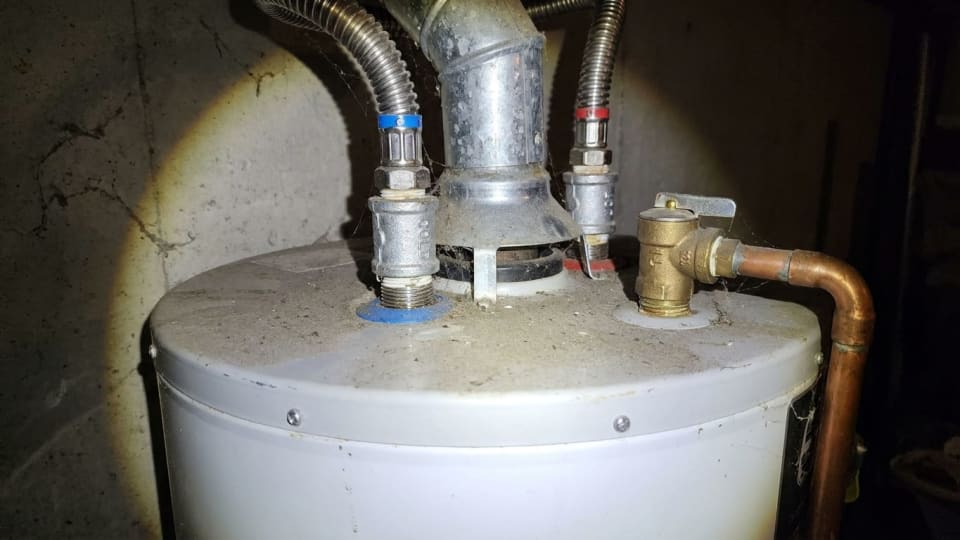
This Old House suggests checking the floor around the heater, the temperature-and-pressure (T&P) relief valve, every connection and fitting, and the tank itself for rust. If the source isn’t obvious, dry everything thoroughly and watch where water shows up again.
| Where the water appears | What it usually means | What to do |
|---|---|---|
| Pipe connections on top (cold inlet, hot outlet) | A loose or corroded connection | Tightening or resealing may fix it; a corroded fitting usually needs replacing |
| T&P relief valve or its discharge pipe | A faulty valve, water pressure that is too high, a temperature set too high, or thermal expansion with nowhere to go | Have it inspected; never cap or plug the valve or pipe |
| Drain valve near the bottom | A worn or failing drain valve | The valve generally needs replacing |
| Element access panels (electric models) | A leaking heating element gasket | Resealing or replacing the gasket |
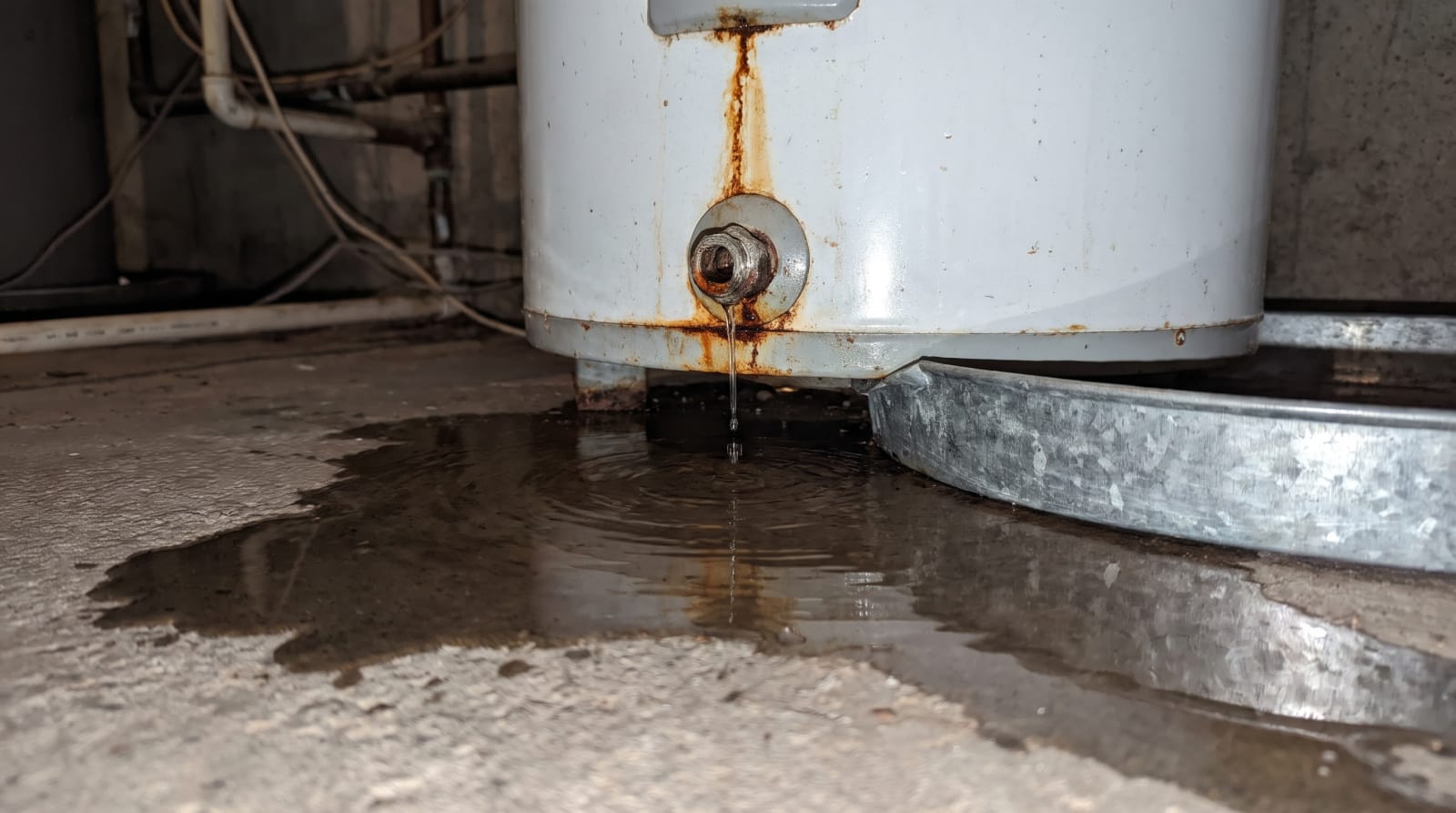
| The tank body or the floor directly under it, with rust | The tank’s inner glass lining has failed and the steel is corroding | The water heater must be replaced |
Source: This Old House – How to Diagnose and Repair a Leaking Water Heater · Checked: November 7, 2026
What a Leaking Relief Valve Is Telling You
The T&P relief valve is the water heater’s safety device. According to This Old House, it opens when the water reaches 210°F or the pressure goes above 150 psi, releasing hot water and steam to bring the pressure down. Its discharge pipe should run down toward the floor and end about 6 inches above it. A drip does not always mean the valve itself is bad: high household water pressure (This Old House considers anything above 80 psi high) or thermal expansion in a closed system can push it open. An expansion tank is often the fix for the latter. A small drip tends to get worse, so it should be checked promptly. Source: This Old House – How and Why to Maintain a Temperature-and-Pressure Valve · Checked: November 7, 2026
Scalding: Keep Hands Away From the Hot Water
Water leaking from a water heater, and especially water released by the relief valve, can be hot enough to burn. The U.S. Consumer Product Safety Commission says most adults can suffer a third-degree burn in about 2 seconds at 150°F, about 6 seconds at 140°F, about 30 seconds at 130°F and about 5 minutes at 120°F. Young children and older adults are most at risk. The CPSC recommends setting residential water heaters to 120°F. Before draining a tank or opening any valve, let the water cool and keep hands and feet out of the discharge path. Source: U.S. CPSC – Avoiding Tap Water Scalds · Checked: November 7, 2026
Why a Drain Pan Matters
Rheem’s owner’s manual states that when a water heater is installed where a leak could cause damage, a suitable drain pan, adequately drained, must be installed under it, in line with local codes. For the model covered in that manual, the pan must be at least 28 inches in diameter. The pan is there to catch leakage from the tank or connections before it damages the floor or the rooms below. If the current heater has no pan, it is worth adding one when the heater is repaired or replaced. Source: Rheem Residential Gas Water Heater Use & Care Manual · Checked: November 7, 2026
When the Tank Must Be Replaced
A water heater tank is steel with a glass lining inside. Once that lining cracks or wears away, the steel corrodes, and This Old House says the only fix is replacing the entire water heater. Warning signs include rusty hot water, rust on the outside of the tank and small puddles at the base. Age matters too: This Old House notes that a heater more than 10 years old may be near the end of its service life, and the U.S. Department of Energy says storage water heaters typically last 10–15 years. Source: This Old House; U.S. Department of Energy · Checked: November 7, 2026
If replacement is on the table, see Water Heater Replacement Cost in Spokane and Tank vs. Tankless Water Heater for Spokane Homes.
When to Call a Plumber
- The water is coming from the tank itself, or there is rust at the base.
- The leak is heavy or the source can’t be found.
- The repair involves gas lines, gas controls or electrical parts.
- The relief valve drips continuously, won’t open or close when tested, or has been capped.
- The heater is more than 10 years old.
- Any part of a gas water heater has been under water. Rheem’s manual says not to use the appliance and to have a qualified service technician inspect it.
For help deciding how urgent the situation is, see Plumbing Emergency or Can It Wait? For urgent situations, see emergency plumber in Spokane, or learn more about water heater repair in Spokane.
Video from Ask This Old House showing how to diagnose and repair a leaking water heater:
Common Questions
Can a water heater leaking from the bottom be repaired?
It depends on the exact source. If the water is coming from the drain valve near the bottom, replacing the valve generally solves it. If the tank itself is corroded and leaking, This Old House says the only fix is replacing the water heater.
Why is the relief valve dripping?
Common causes are a faulty valve, household water pressure that is too high, a thermostat set too high, or thermal expansion when there is no expansion tank. Because the valve is a safety device, it should be inspected rather than capped.
Is it safe to keep using the water heater while it leaks?
Shutting off the cold-water supply and the power or gas is the safer move until the source is known. A leak from the tank body will not stop on its own, and a relief valve that is releasing water may be responding to excess temperature or pressure.
Can a gas water heater be used after a basement flood?
Not until it has been checked. Rheem’s manual says not to use the appliance if any part has been under water and to call a qualified service technician to inspect it and replace any control parts that were submerged.
Quick Summary
- Close the cold-water supply to the heater, then shut off power (electric) or the gas valve (gas).
- Smell gas? Leave the house and call the gas company from outside.
- Keep hands clear of hot water: 140°F can cause a third-degree burn in about 6 seconds.
- Fittings and drain valves are often repairable; never plug a dripping relief valve.
- A corroded, leaking tank means the water heater must be replaced.
- A drained pan under the heater limits damage from future leaks.
Water Heater Leaking in Spokane?
One call connects to an independent, local plumbing provider serving Spokane and Spokane Valley for water heater leaks, repairs and replacements.
📞 Call Now – Connect With a Spokane Plumber
Spokane Home Help is a referral service, not a plumbing contractor.
Related Articles
- Water Heater Replacement Cost in Spokane
- Tank vs. Tankless Water Heater for Spokane Homes
- How to Shut Off Your Main Water Valve
Spokane Home Help is a referral service and is not a plumbing contractor. Calls may be connected to an independent, third-party plumbing provider serving the caller’s area. Spokane Home Help does not perform plumbing work and is not responsible for the work, pricing, licensing or availability of any provider. Before work begins, confirm the provider’s Washington L&I registration and ask for a written estimate.