
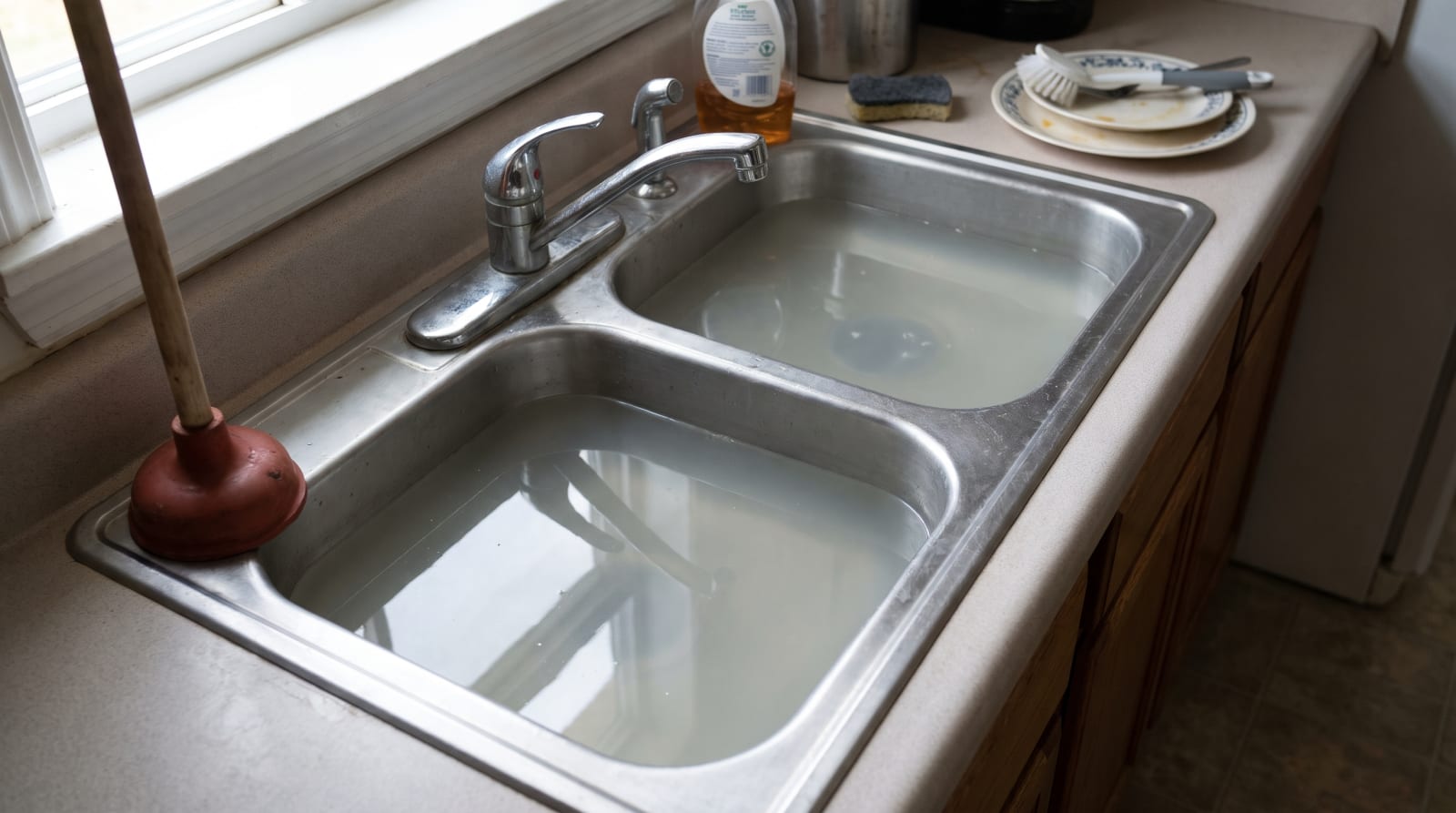
A slow sink is an annoyance; a tub that fills with dirty water when the toilet flushes is a warning. Clogs that are left alone tend to get worse, and a blocked main line can push wastewater back into the house. Spokane Home Help connects callers with independent, local plumbing providers serving Spokane and nearby communities for clogged sinks, tubs, toilets and main sewer lines.
📞 Call Now – Drain Cleaning Help
What to Do Right Now
Stop sending water down the clogged drain. Every extra gallon has to go somewhere. If more than one fixture is backing up, stop using water in the whole house; that points to the main line.
Don’t keep flushing a rising toilet. Close the shutoff valve behind the toilet if the bowl is close to overflowing.
Try a plunger on a single clog. A cup plunger for sinks and tubs, a flange plunger for toilets. If it doesn’t clear after a few tries, stop.
Go easy on chemical drain cleaners. Harsh products can be hard on older pipes and leave caustic water sitting in the line for whoever opens it next.
Call a plumber if the clog keeps coming back, several drains are slow at once, or sewage appears at a floor drain.
Sources: City of Spokane Wastewater, Spokane County · Checked: November 7, 2026
In this guide: Warning signs · Common causes in Spokane homes · How plumbers clear drains · What affects the cost · Safety · How the call works · Video · Common questions
Signs a Drain Needs Professional Cleaning
| Problem | What it usually means | How urgent |
|---|---|---|
| One sink or tub draining slowly | Hair, soap scum or grease building up near the trap | Low – can usually wait for a scheduled visit |
| Bad smell coming from a drain | Buildup in the trap or line, or a trap that has dried out | Low to moderate |
| Gurgling sounds from drains or the toilet | A partial blockage or a venting problem | Moderate – often gets worse |
| Clog keeps coming back after plunging | Buildup further down the line, roots or a damaged pipe | Moderate – a camera inspection can show the cause |
| Tub or shower fills when the toilet is flushed | A blockage in the main line | High – limit water use |
| Several drains slow at the same time | Main sewer line problem | High – call soon |
| Water or sewage at a basement floor drain | Main line backup | Urgent – stop using water, see emergency plumber |
For a closer look at repeat clogs, see Why Does My Drain Keep Clogging?
Common Causes of Clogs in Spokane Homes
Kitchen grease. The City of Spokane’s wastewater program explains that fats, oils and grease from foods such as meat fats, lard, butter, sauces, dressings and dairy can go down the drain, build up in pipes over time and cause blockages, odors and overflows in homes and streets. Spokane County reports that grease from restaurants, homes and industrial sources accounts for approximately 47% of sanitary sewer blockages. Source: City of Spokane – Fats, Oils and Grease brochure (PDF); Spokane County – FOG Control · Checked: November 7, 2026
Wipes and paper products. Spokane County says that “flushable” products, no matter how they are advertised, do not break down properly in the sewer system and cause backups in sewer mains. Inside a home’s own pipes, wipes, paper towels and feminine products can snag and collect other debris. Source: Spokane County – Sewer FAQ · Checked: November 7, 2026
Hair and soap. Bathroom sinks, tubs and showers clog mostly from hair bound together with soap scum and toothpaste. These clogs usually sit close to the drain opening or in the trap.
Tree roots and older sewer lines. Many Spokane neighborhoods, from the South Hill to Hillyard, have mature trees and homes that are several decades old. Roots look for moisture and can enter older sewer pipes through cracks and joints, and older pipes can sag or shift over time. Spokane County notes that the side sewer, the line from the house to the public main, is privately owned, so clearing or repairing it is generally the homeowner’s job. If a camera shows broken or root-filled pipe, the next step may be sewer line repair.
How Plumbers Clear Drains
| Method | Typically used for | What it does |
|---|---|---|
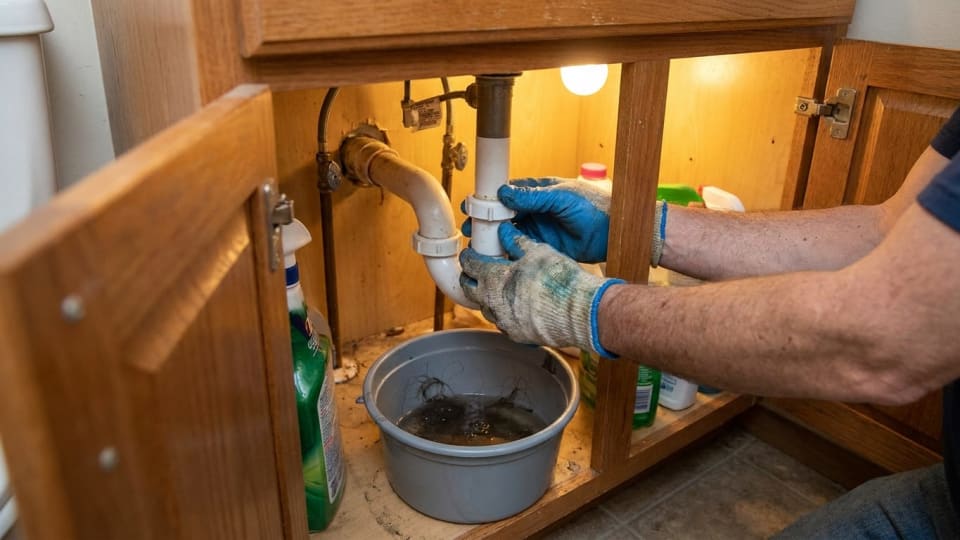
| Removing and cleaning the trap | Sink clogs, dropped objects | Takes apart the U-shaped trap under the sink to clear debris by hand |
| Hand auger (drain snake) | Sink, tub, shower and toilet clogs | A flexible cable is fed into the drain to break up or pull out the clog |
| Drain cleaning machine | Deeper clogs, main lines, roots | A powered cable with cutting heads reaches further down the line, often through a cleanout |
| Hydro jetting | Grease, sludge and recurring main line clogs | High-pressure water scours the inside walls of the pipe |
| Camera inspection | Repeat clogs, suspected roots or broken pipe | A small camera shows what’s inside the line and where the problem is |
Not every method is right for every pipe. Ask the plumber which method they recommend and why, especially for older or fragile lines.
What Affects the Cost of Drain Cleaning
- Which drain is clogged: a bathroom sink is a smaller job than a main sewer line.
- How far down the clog is: clogs deep in the line need longer cables or powered equipment.
- Access: whether there’s an accessible cleanout, or the line has to be reached through a toilet, roof vent or by removing a fixture.
- Method: snaking, hydro jetting and camera inspection use different equipment.
- What’s found: roots, collapsed or broken pipe can turn a cleaning into a repair.
- Timing: after-hours and weekend visits usually cost more than scheduled ones.
Ask for a written estimate before work begins, and ask what happens if the line turns out to be damaged.
How the Call Works
- Call and describe the problem – which drains are slow, whether more than one fixture is affected, and anything already tried.
- The call is connected to an independent, local plumbing provider serving the area.
- Talk to the plumber directly. Ask how they plan to clear the line, ask for a written estimate, and decide whether to go ahead.
Before hiring: check Washington L&I contractor registration. The Washington State Department of Labor & Industries’ Verify tool shows whether a business has an active contractor registration and can confirm that a person doing plumbing work holds a Washington plumber certification. It also shows bond and workers’ comp information. Source: Washington L&I – Verify a Contractor, Tradesperson or Business · Checked: November 7, 2026
Video from Ask This Old House: how common sink, tub and toilet clogs are cleared, and which tools are used for each:
Common Questions
Are “flushable” wipes safe to flush?
Spokane County’s answer is no: these products, no matter how they are advertised, do not break down properly in the sewer collection system. Put wipes in the trash.
How often should drains be cleaned?
Most homes only need drain cleaning when there’s a problem. Homes with recurring main line clogs, or large trees near the sewer line, may benefit from a camera inspection to find the cause and from periodic main line cleaning.
Is a clogged main line an emergency?
If sewage is backing up into the home, yes. Stop using water and see Emergency Plumber in Spokane. Warning signs to watch for are covered in Signs of a Sewer Line Problem.
Who is responsible for the sewer line between the house and the street?
In Spokane County’s sewer service area, the County says it is only responsible for maintaining the public sewer main, and that the side sewer from the house to the main is privately owned. City of Spokane customers can check with the City about their own service. Source: Spokane County – Sewer FAQ · Checked: November 7, 2026
Can a slow drain wait?
A single slow sink or tub usually can, as long as it still drains. Clogs tend to get worse over time, though, so it makes sense to clear it before it stops completely. Multiple slow drains or any backup into a floor drain should be checked sooner.
Areas served: Spokane neighborhoods including the South Hill, North Spokane, Hillyard, Browne’s Addition, Indian Trail and Five Mile Prairie, plus nearby Spokane Valley, Liberty Lake, Airway Heights, Cheney, Mead and Medical Lake.
Clogged Drain in Spokane?
One call connects to an independent, local plumbing provider serving Spokane and Spokane Valley for clogged sinks, tubs, toilets and main sewer lines.
📞 Call Now – Connect With a Spokane Plumber
Spokane Home Help is a referral service, not a plumbing contractor.
Related Articles
- All drain cleaning articles →
- Why Does My Drain Keep Clogging?
- Signs of a Sewer Line Problem
- Is It a Plumbing Emergency, or Can It Wait?
- How to Check Your Home for a Hidden Water Leak
Spokane Home Help is a referral service and is not a plumbing contractor. Calls may be connected to an independent, third-party plumbing provider serving the caller’s area. Spokane Home Help does not perform plumbing work and is not responsible for the work, pricing, licensing or availability of any provider. Before work begins, confirm the provider’s Washington L&I registration and ask for a written estimate.