
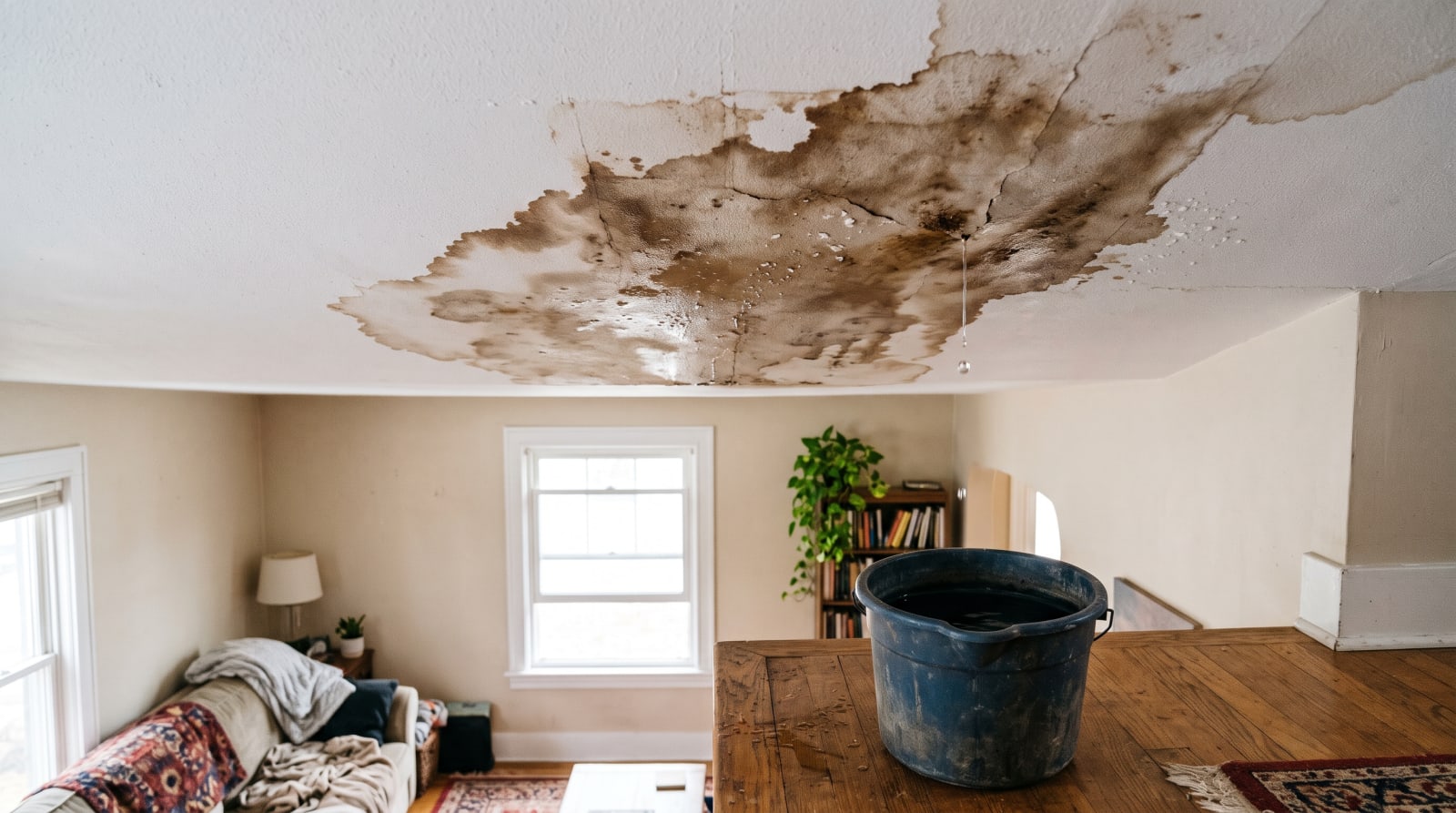
A water bill that jumps for no reason, a stain spreading across the ceiling, or the sound of running water when every faucet is off: hidden leaks often do their damage out of sight, inside walls, under floors or below a concrete slab. This page shows how to confirm a leak at home in a few minutes, what the warning signs mean, and how plumbers pinpoint a leak without tearing open more than necessary.
📞 Call Now – Find the Leak in Spokane
What to Do Right Now
Water actively spraying or pooling: shut off the main water valve first, then clean up the water. See How to Shut Off Your Main Water Valve.
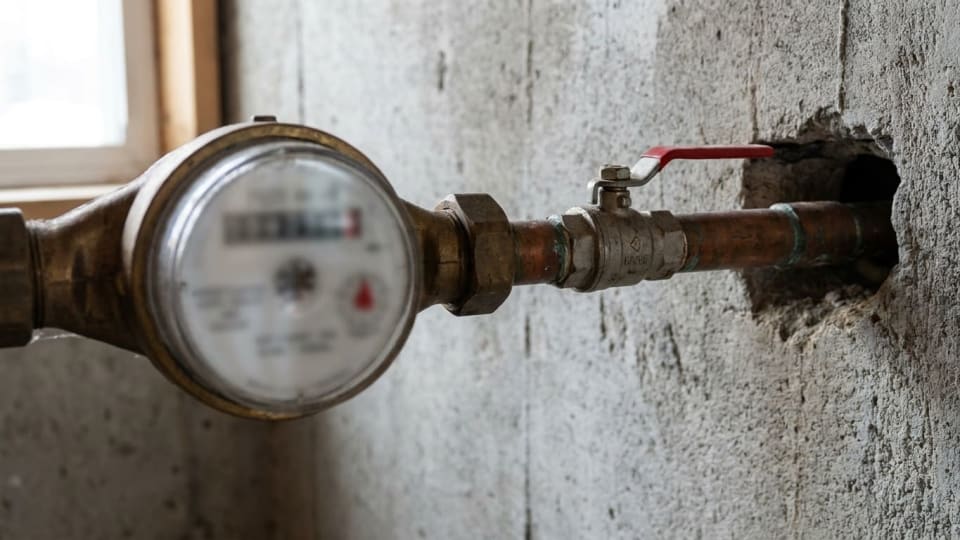
Suspect a hidden leak: do the EPA meter test. Read the water meter, use no water for two hours, then read it again. If the reading changed at all, there’s probably a leak.
Check the toilets: put a few drops of food coloring in the tank. If color shows up in the bowl within 10 minutes, the toilet is leaking.
Wet ceiling or wall near electrical fixtures: turn off power to that area at the breaker and keep clear.
Call a plumber if the meter keeps moving with everything off, a stain keeps growing, or there are warm spots on the floor.
Source: U.S. EPA WaterSense – Fix a Leak Week · Checked: November 7, 2026
In this guide: Signs of a hidden leak · The water meter test · Why leaks happen in Spokane homes · How plumbers find leaks · Slab leaks · What affects the cost · How the call works · Video · Common questions
Signs of a Hidden Water Leak
| Sign | What it usually means | How urgent |
|---|---|---|
| Water meter moves with all water turned off | A leak somewhere after the meter: a fixture, a supply line, or a pipe in a wall, floor or yard | Medium to high |
| Water bill higher than usual with no change in use | A running toilet, dripping fixture or hidden pipe leak | Medium |
| Stains, bubbling paint or sagging drywall on a ceiling or wall | A leaking pipe, drain or fixture above or inside the wall | High – damage spreads |
| Musty smell or mold growth | Ongoing moisture, often from a slow leak | Medium to high |
| Warm spots on a floor, sound of running water | Possible slab leak in a hot water line under concrete | High |
| Low water pressure throughout the home | A leak in the main line or a slab leak | Medium to high |
| Soggy or unusually green patches in the yard | A leak in the service line between the meter and the house | Medium |
| New leak days after a hard cold snap | A pipe that cracked while frozen and leaks once it thaws | High |
Source: This Old House – What Are the Signs of a Slab Leak?; U.S. EPA WaterSense – Fix a Leak Week · Checked: November 7, 2026
The Water Meter Test (and Other Quick Checks)
The EPA’s WaterSense program estimates that household leaks can waste more than 9,300 gallons of water per year in an average home, and that about 9% of homes have leaks wasting 50 gallons or more per day. Three simple checks can confirm whether a home has one:
- Meter test. Turn off every faucet and water-using appliance. Read the water meter, wait two hours without using any water, and read it again. If the reading changed at all, there’s probably a leak.
- Toilet dye test. Add a few drops of food coloring to the toilet tank. If color appears in the bowl within 10 minutes, the flapper or valve is leaking. Flush afterward so the tank doesn’t stain.
- Winter usage check. Look at the water bill for a cold month such as January or February. WaterSense says a family of four using more than 12,000 gallons per month likely has a serious leak.
For a room-by-room walkthrough, see How to Check Your Home for a Hidden Water Leak. Source: U.S. EPA WaterSense – Fix a Leak Week · Checked: November 7, 2026
Why Leaks Happen in Spokane Homes
- Cold snaps. Spokane winters bring stretches of hard cold. A pipe that splits while frozen often doesn’t leak until the ice melts, sometimes days later. See How to Prevent Frozen Pipes in Spokane.
- Older plumbing. Many homes in neighborhoods like the South Hill, Browne’s Addition and Hillyard are decades old. This Old House lists general corrosion, especially in copper and galvanized steel pipe, among the common causes of slab and pipe leaks.
- High water pressure. Excess pressure strains pipes, joints and fixture supply lines.
- Shifting soil and roots. Soil movement and tree roots can stress pipes under slabs and service lines in the yard.
- Worn parts. Toilet flappers, faucet cartridges and braided supply lines under sinks wear out and start to drip.
Source: This Old House – What Are the Signs of a Slab Leak?; City of Spokane Water Department – Frozen Pipes · Checked: November 7, 2026
How Plumbers Find Leaks
The goal of leak detection is to find the exact spot before opening walls, floors or concrete. Depending on the situation, a plumber may use one or more of these methods:
| Method | How it works | Often used for |
|---|---|---|
| Isolation testing | Shutting off sections of the system one at a time while watching the meter | Narrowing a leak to one area or line |
| Pressure testing | Pressurizing a line and watching for a drop that shows it isn’t holding | Confirming which line is leaking |
| Acoustic listening | Sensitive microphones pick up the sound of water escaping a pipe | Pipes under slabs, floors and yards |
| Thermal imaging | An infrared camera shows temperature differences from warm or wet areas | Hot water lines, leaks behind drywall |
| Moisture meters | Measuring moisture in drywall, wood or flooring | Mapping how far water has spread |
| Video camera inspection | A camera and light fed into the pipe to spot crushed sections, corroded joints and roots | Drain and sewer lines, slab lines |
Slab Leaks
A slab leak is a leak in a water line running under a concrete floor. This Old House lists warm spots on the floor (often above a hot water line), damp carpet, cracks in lower walls or baseboards, a musty smell and the sound of running water as common signs. Repair options include a spot repair (cutting through the concrete to replace the damaged section), pipe lining (sealing the pipe from the inside with a resin-coated liner) and rerouting the line through a wall or attic so the slab stays intact. Source: This Old House – What Are the Signs of a Slab Leak? · Checked: November 7, 2026
What Affects the Cost
- How hard the leak is to find – This Old House notes that a leak that is hard to pinpoint adds cost before any repair begins.
- Where the leak is – a supply line under a sink is a different job from a pipe inside a finished wall or under a slab.
- Equipment needed – acoustic, thermal or camera equipment versus a simple visual check.
- Repair method – spot repair, lining or rerouting.
- Access and restoration – opening and patching drywall, flooring or concrete.
- Extent of water damage – long-running leaks may also need drying or mold work by other trades.
Ask whether detection and repair are quoted separately, and get the estimate in writing. Source: This Old House – Slab Leak Repair Cost · Checked: November 7, 2026
How the Call Works
- Call and describe the problem – what was noticed, where, and what the meter test showed.
- The call is connected to an independent local plumbing provider serving the area.
- Talk to the plumber directly, ask for a written estimate, and decide whether to go ahead.
Before hiring: check Washington L&I contractor registration. The Washington State Department of Labor & Industries’ Verify tool shows whether a business has an active contractor registration and whether a tradesperson doing plumbing work is certified in Washington. Source: Washington L&I – Verify a Contractor, Tradesperson or Business · Checked: November 7, 2026
Video from This Old House: how to track down a bathroom leak and trace it back to its source:
Common Questions
Is a small leak worth fixing right away?
Yes. WaterSense estimates household leaks can waste more than 9,300 gallons a year, and a slow leak inside a wall or floor can lead to mold, rot and damaged finishes long before it shows.
The meter moved during the test. What now?
Check toilets and visible fixtures first. If those are dry, the leak may be in a wall, under a floor or in the service line, which is when professional leak detection helps. If water is actively escaping, shut off the main valve.
Can a plumber find a leak without opening walls?
Often the location can be narrowed down first with tools such as acoustic listening, thermal imaging, moisture meters and pressure tests, so only a small opening is needed for the repair itself.
Will homeowners insurance cover a leak?
It depends on the policy and the cause. This Old House notes insurance may cover leaks caused by sudden events, such as a pipe that bursts in a cold snap, but terms vary. Check with the insurer directly.
Is a leak an emergency?
Active spraying, water near electrical fixtures or a sagging ceiling are emergencies. A slow drip usually isn’t, but it should be fixed soon. See What to Do When a Pipe Bursts and emergency plumber in Spokane.
Areas served: Spokane neighborhoods including South Hill, North Spokane, Hillyard, Browne’s Addition, Indian Trail and Five Mile Prairie, plus nearby Spokane Valley, Liberty Lake, Airway Heights, Cheney, Mead and Medical Lake. Related services: water heater repair and sewer line repair.
Suspect a Hidden Leak in Spokane?
One call connects to an independent, local plumbing provider serving Spokane and Spokane Valley for leak detection, slab leaks and pipe repairs.
📞 Call Now – Get Leak Detection Help
Spokane Home Help is a referral service, not a plumbing contractor.
Related Articles
- All leak detection articles →
- How to Check Your Home for a Hidden Water Leak
- What to Do When a Pipe Bursts: First Steps
- How to Shut Off Your Main Water Valve
- How to Prevent Frozen Pipes in Spokane
Spokane Home Help is a referral service and is not a plumbing contractor. Calls may be connected to an independent, third-party plumbing provider serving the caller’s area. Spokane Home Help does not perform plumbing work and is not responsible for the work, pricing, licensing or availability of any provider. Before work begins, confirm the provider’s Washington L&I registration and ask for a written estimate.