
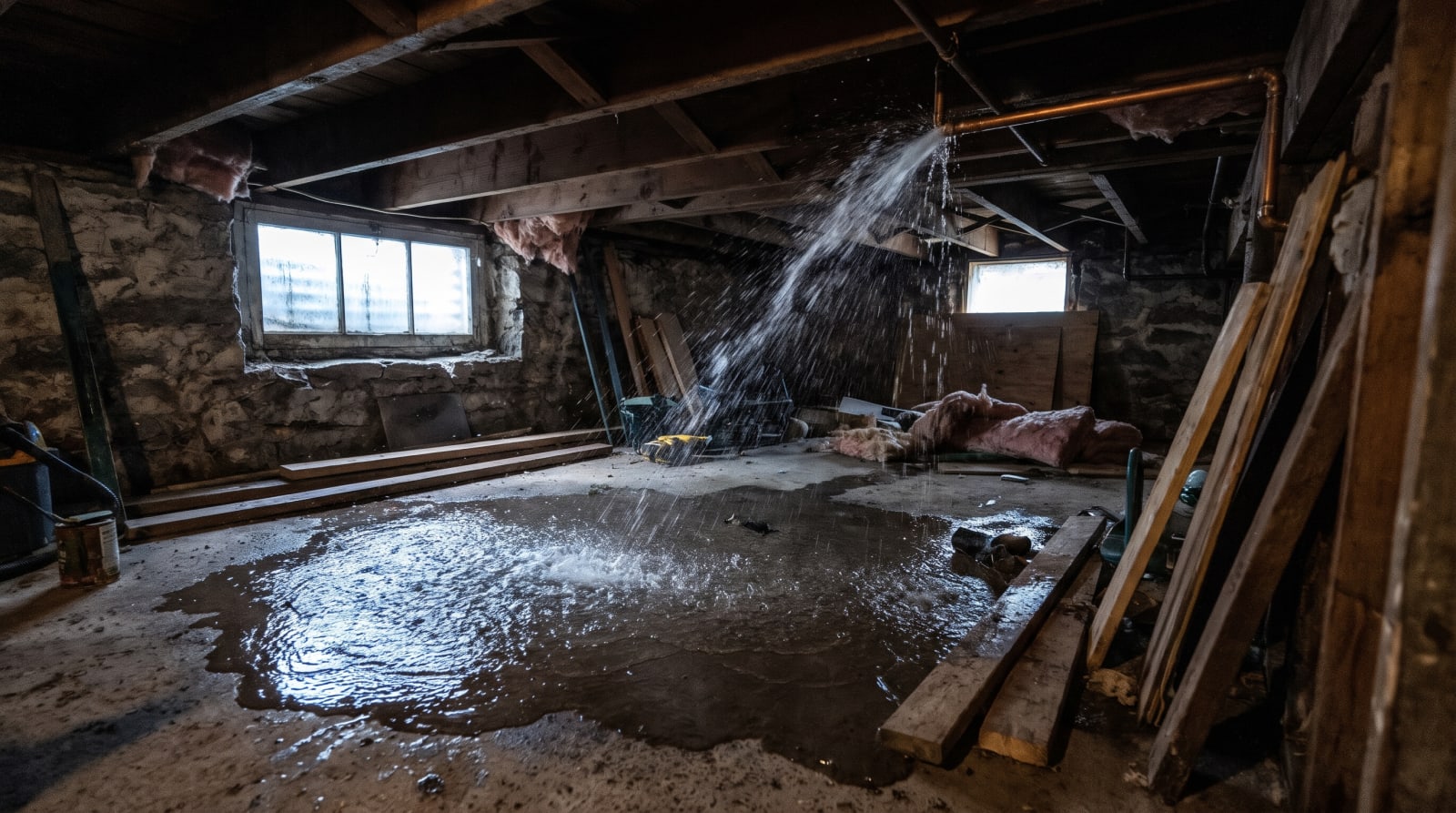
Water spraying from a pipe? Sewage coming up a floor drain? No water at all in freezing weather? A plumbing emergency gets worse by the minute: water spreads across floors, soaks into drywall and insulation, and can reach electrical outlets. Spokane Home Help connects callers with independent, local plumbing providers serving Spokane and nearby communities, so one call can put a homeowner in touch with a plumber while the water is being dealt with.
📞 Call Now – Emergency Plumbing Help
What to Do Right Now
1. Shut off the water. The main shutoff valve is usually where the water line enters the house: basement, crawl space, utility room or near the water heater. Turn it clockwise until it stops. Step-by-step help: How to Shut Off Your Main Water Valve.
2. Keep away from electricity. If water is near outlets, appliances or the electrical panel, stay out of the water. Switch off power at the breaker only if it can be reached from a dry spot.
3. Smell gas? Get out first. Avista’s guidance is to leave the area, and to report a gas leak by calling Avista at (800) 227-9187 from a safe place. Plumbing can wait.
4. Water heater leaking? Turn off its power at the breaker (electric) or set the gas control to “off” (gas), then close the cold-water valve on top of the tank. More: Water Heater Leaking: What to Do.
5. Document, then call a plumber. Take photos and video of the damage for the insurance company, then start moving valuables and soaking up water.
Sources: City of Spokane Water Department, Avista, EPA, CDC · Checked: November 7, 2026
In this guide: What counts as an emergency · Why emergencies happen in Spokane homes · What a plumber typically does · What affects the cost · Safety · How the call works · Video · Common questions
What Counts as a Plumbing Emergency?
Not every plumbing problem needs a plumber in the middle of the night. A useful rule: if water is actively escaping and can’t be stopped, sewage is coming into the home, or there is no water in freezing weather, treat it as urgent. A single slow drain or a dripping faucet can usually wait for a regular appointment, which often costs less.
| Problem | What it usually means | How urgent |
|---|---|---|
| Water spraying or pouring from a pipe | A burst or split supply line, or a failed fitting | Urgent – shut off the main valve and call |
| Sewage coming up through a floor drain, tub or toilet | A blockage or break in the main sewer line | Urgent – stop using all water and avoid contact |
| No water from any faucet in freezing weather | A frozen supply line, often in a crawl space or exterior wall | Urgent – a frozen pipe can split as it thaws |
| Water leaking from the water heater tank | A failing tank, valve or connection | Urgent – shut off power or gas and the cold-water valve |
| Water stain spreading on a ceiling or wall | A hidden leak in a supply or drain line | Soon – shut off the water and call |
| Toilet overflowing again and again | A clog, possibly in the main line | Close the valve behind the toilet; call if it repeats |
| One slow drain or a dripping faucet | A local clog or a worn part | Can usually wait for a scheduled visit |
Not sure which side of the line a problem falls on? See Is It a Plumbing Emergency, or Can It Wait?
Why Plumbing Emergencies Happen in Spokane Homes
Hard freezes. Spokane winters bring cold snaps that put pipes in crawl spaces, garages and exterior walls at risk. The City of Spokane Water Department advises finding the home’s water shutoff valves before freezing weather, keeping the home above 55°F even when away, and avoiding rapid temperature changes, which can cause pipes to crack or burst. If a pipe does freeze, the City’s advice is to thaw it quickly or call a plumber, and never to use an open flame. Source: City of Spokane Water Department – Frozen Pipes · Checked: November 7, 2026
Older homes and aging pipes. Neighborhoods such as the South Hill, Browne’s Addition and Hillyard include many homes that are several decades old. Older supply lines, valves and drain pipes have simply been in service longer, and a valve that hasn’t been turned in years may not close fully when it’s needed most. It’s worth testing the main shutoff before an emergency happens.
Sewer lines, roots and grease. Mature trees are part of the character of many Spokane streets, and roots can work their way into older sewer pipes through cracks and joints. Spokane County notes that the side sewer, the line from the house to the public main, is privately owned, and that it is usually the homeowner’s responsibility to clean up after a sewer backup. The County also reports that grease from restaurants, homes and industrial sources accounts for approximately 47% of sanitary sewer blockages, and that wipes, no matter how they are advertised, do not break down properly in the sewer system. Source: Spokane County – Sewer FAQ; Spokane County – Fats, Oils and Grease · Checked: November 7, 2026
What an Emergency Plumber Typically Does
| Step | What usually happens |
|---|---|
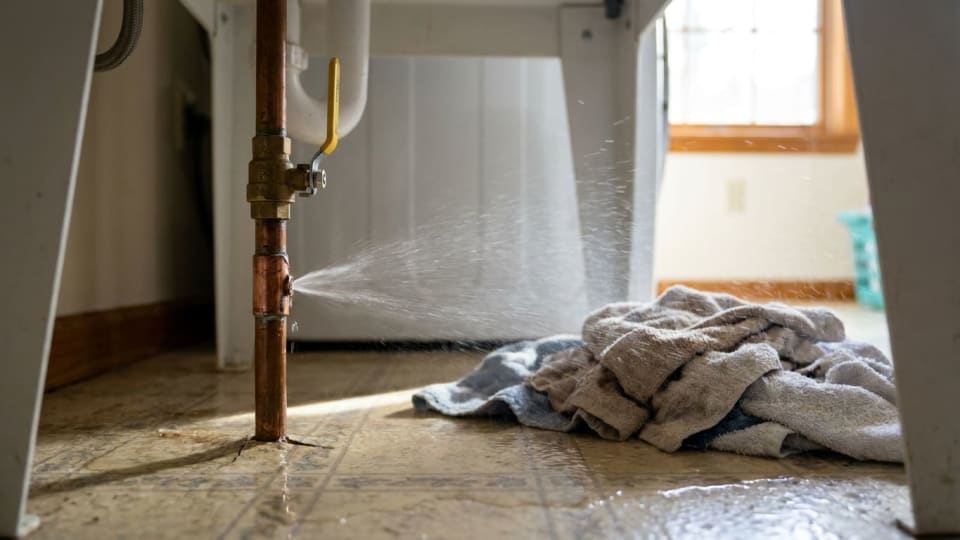
| 1. Stop the damage | Confirms the water (and gas, if involved) is off and isolates the affected line so water can be restored to the rest of the house where possible. |
| 2. Find the source | Inspects visible pipes, fittings and fixtures. Hidden leaks may need an access panel or leak detection; sewer problems may need a camera inspection. |
| 3. Repair | Replaces a burst section of pipe, a failed fitting or valve, or clears a blocked drain or main line. Some situations get a temporary repair first and a permanent fix later. |
| 4. Test | Turns the water back on, checks for leaks and confirms drains are flowing. |
| 5. Explain next steps | If bigger work is needed, such as sewer line repair or water heater repair, ask for a written estimate before agreeing to it. |
What Affects the Cost of an Emergency Plumbing Call
Emergency and after-hours visits usually cost more than a scheduled appointment. Every job is different, and the final price depends on several factors:
- Time of the call: nights, weekends and holidays are often priced higher than regular business hours.
- Type of problem: a single failed fitting is a different job from a frozen line in a crawl space or a main sewer line backup.
- Access: pipes inside finished walls, under floors or in tight crawl spaces take more time to reach.
- Parts and materials: pipe type (copper, PEX, galvanized), valves and fittings needed.
- Equipment: camera inspection, drain machines or thawing equipment.
- Follow-up work: whether a temporary repair is followed by a larger permanent repair.
Before work starts, ask the plumber about any trip or call-out charge and for a written estimate.
How the Call Works
- Call and describe the problem – what’s happening, where the water is coming from, and whether the main valve is off.
- The call is connected to an independent, local plumbing provider serving the area.
- Talk to the plumber directly. Ask about the call-out charge, ask for a written estimate, and decide whether to go ahead.
Before hiring: check Washington L&I contractor registration. The Washington State Department of Labor & Industries’ Verify tool shows whether a business has an active contractor registration and can confirm that a person doing plumbing work holds a Washington plumber certification. It also lets homeowners check for claims against a contractor’s bond and see workers’ comp coverage. Source: Washington L&I – Verify a Contractor, Tradesperson or Business · Checked: November 7, 2026
Video from Austin Water, a public water utility: how to find and turn off a home’s water shutoff valve. Valve locations differ from house to house; in many Spokane homes, start where the water line comes through the basement or crawl-space wall.
Common Questions
Insurance company or plumber: who should be called first?
Stop the water first, then get a plumber involved, then contact the insurer. Insurers generally expect homeowners to take reasonable steps to prevent further damage, and photos taken before cleanup help document the claim.
Sewage is backing up into the basement. What now?
Stop using all water in the house (no flushing, showers, laundry or dishwasher) and keep people and pets away from the water. The problem may be in the home’s own side sewer or in the public main. Spokane County sewer customers can find the County’s sewer contact details on the County website, and City of Spokane customers can find the City’s contact details on the city website. If the blockage is on the private side, a plumber can clear and inspect the line. See also Signs of a Sewer Line Problem. Source: Spokane County – Sewer FAQ · Checked: November 7, 2026
There’s no water in the middle of winter. Is that an emergency?
It can be. No water during freezing weather often means a frozen pipe, and a frozen pipe can split. The City of Spokane advises shutting off the water, or confirming the shutoff valve works, before thawing, using low, gradual heat such as a hair dryer, and never an open flame. City of Spokane water customers can find the Water Department’s contact details on the city website. If the frozen section can’t be found or reached, call a plumber. More: How to Prevent Frozen Pipes in Spokane.
The water is off and the leak stopped. Can the repair wait?
Sometimes. If the damaged line can be isolated with a local valve and the rest of the house still has water, a repair during regular hours may be fine. If the whole house is without water, the leak is inside a wall or ceiling, or it’s freezing outside, it’s usually worth calling now. See What to Do When a Pipe Bursts.
How can a homeowner check that a plumber is registered in Washington?
Use the L&I Verify tool. Search by business name, owner name, UBI number or license number to see contractor registration status, and look up the plumber’s certification.
Areas served: Spokane neighborhoods including the South Hill, North Spokane, Hillyard, Browne’s Addition, Indian Trail and Five Mile Prairie, plus nearby Spokane Valley, Liberty Lake, Airway Heights, Cheney, Mead and Medical Lake.
Plumbing Emergency in Spokane?
One call connects to an independent, local plumbing provider serving Spokane and Spokane Valley for burst pipes, major leaks, sewer backups and water heater failures.
📞 Call Now – Connect With a Spokane Plumber
Spokane Home Help is a referral service, not a plumbing contractor.
Related Articles
- All emergency plumbing articles →
- What to Do When a Pipe Bursts: First Steps
- How to Shut Off Your Main Water Valve
- Is It a Plumbing Emergency, or Can It Wait?
- Water Heater Leaking: What to Do
Spokane Home Help is a referral service and is not a plumbing contractor. Calls may be connected to an independent, third-party plumbing provider serving the caller’s area. Spokane Home Help does not perform plumbing work and is not responsible for the work, pricing, licensing or availability of any provider. Before work begins, confirm the provider’s Washington L&I registration and ask for a written estimate.