
The Short Answer
Shut off the water first: close the main shutoff valve right away. If the house valve is broken or missing, the water can be turned off at the water meter.
Stay clear of electricity: never touch electrical equipment that is wet or while standing in water.
Drain, dry and document: open a faucet to relieve pressure, photograph the damage, and get wet areas dry within 24–48 hours to head off mold.
Call a licensed plumber to repair the pipe before the water goes back on.
Sources: City of Bellevue Utilities, American Red Cross, U.S. EPA · Checked: November 7, 2026
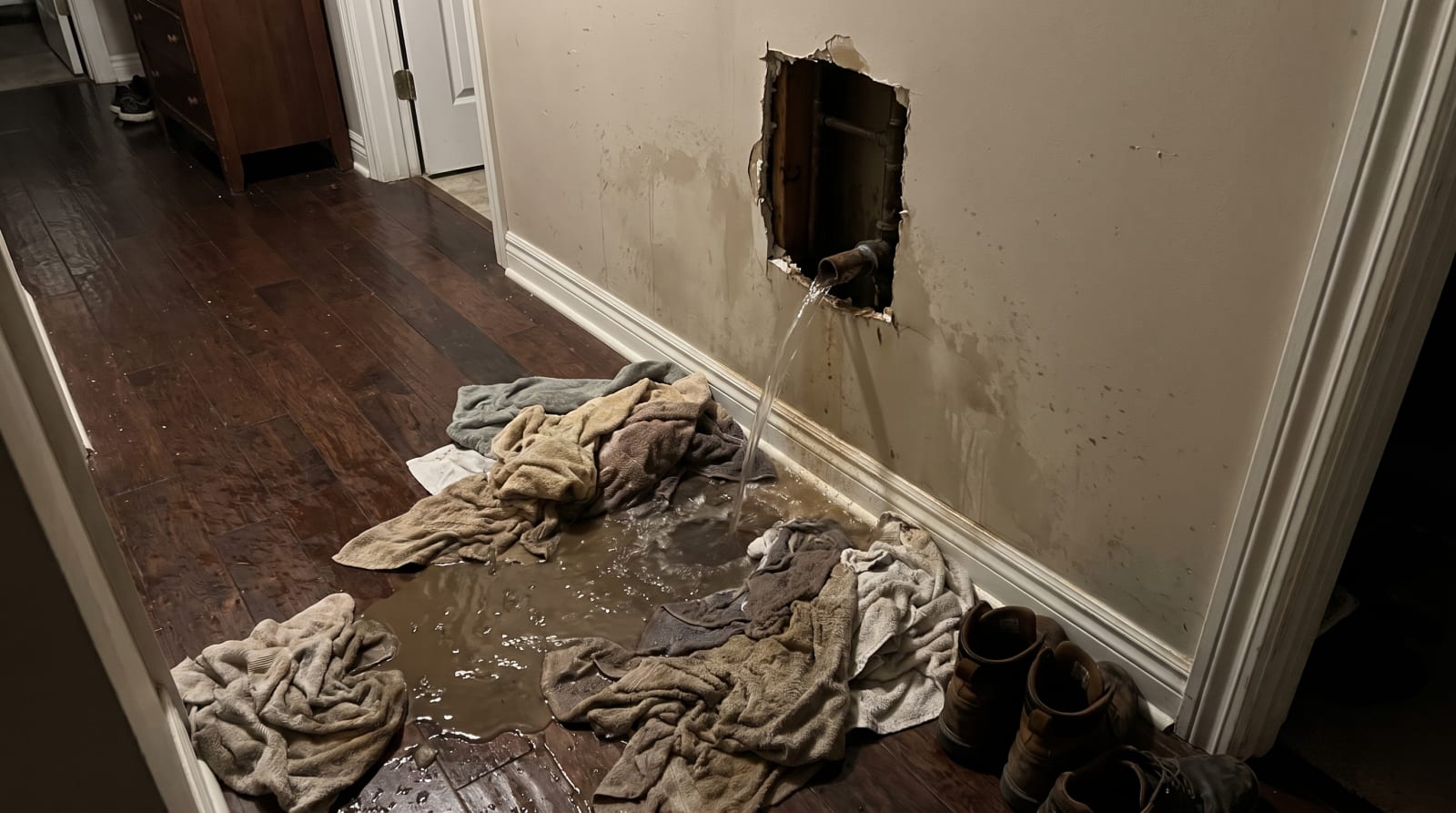
Every hard freeze in Spokane brings a wave of split pipes, and the leak often shows up only when the ice thaws. A burst supply line can push water across floors, into drywall and toward outlets within minutes, so the order of the first few moves matters more than anything else. This guide walks through what to do in the first hour, how to limit water damage and mold, what to know for an insurance claim, and how to check a plumber’s Washington registration before the repair starts.
In this guide: Shut off the water · Make the area safe · Drain the lines · Contain the leak · Dry out fast · Document for insurance · Get it repaired · Video · Common questions
Step 1: Shut Off the Main Water Valve
When a pipe breaks, close the main shutoff valve immediately to stop the flooding. If the home has no main shutoff, or the valve is broken, the water can be turned off at the water meter with a meter valve key or crescent wrench, turning the meter valve clockwise. Source: City of Bellevue Utilities – Prevent Frozen Pipes and What to Do If One Breaks · Checked: November 7, 2026
In colder climates like Spokane’s, the main valve is usually inside the house, where the water line enters, on the same side as the meter. A round wheel handle (gate valve) turns clockwise until it stops; a lever handle (ball valve) turns a quarter turn so it sits across the pipe. Full details are in How to Shut Off Your Main Water Valve. Source: The Home Depot – How to Turn Off the Water to Your House · Checked: November 7, 2026
City of Spokane water customers can find the Water Department’s contact details on the city’s frozen pipes page. Homes outside city limits should check with their own water provider. Source: City of Spokane Water Department – Frozen Pipes · Checked: November 7, 2026
Step 2: Make the Area Safe
Water and electricity are the biggest hazard after a burst pipe. If water has reached outlets, appliances or the electrical panel, stay out of the wet area. Switch off power to that part of the house at the breaker only if the panel is dry and can be reached without standing in water.
Step 3: Relieve Pressure and Protect the Water Heater
- Open a faucet after the main is off to relieve pressure in the lines. Opening cold-water faucets on the bottom floor of the home lets more of the remaining water drain out.
- Flush toilets to empty the tanks if the break is near a bathroom.
- Electric water heater: turn off its power when the water to the house is shut off. Running an electric heater without water can burn out the heating elements.
- Gas water heater: follow the manufacturer’s instructions in the owner’s manual.
Source: The Home Depot – How to Turn Off the Water to Your House · Checked: November 7, 2026
Step 4: Find and Contain the Leak
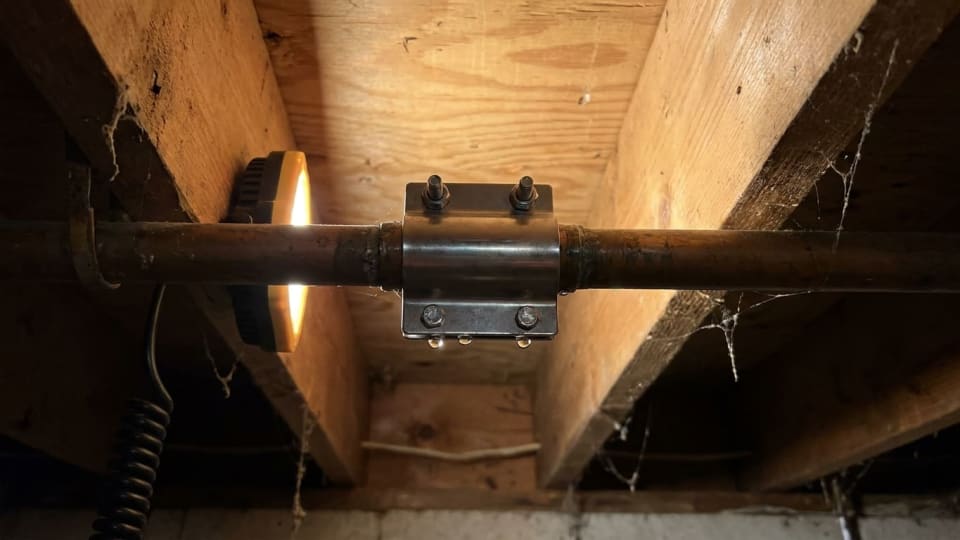
Look for the source: a split pipe, a failed fitting, or a wet, bulging spot in a wall or ceiling. Place buckets under drips and move rugs, furniture and boxes out of the wet area. A pipe repair clamp or heavy tape can slow a small leak for a short time, but it is not a repair, and the water should stay off until the pipe is properly fixed.
Step 5: Remove Water and Dry Out Within 24–48 Hours
According to the U.S. Environmental Protection Agency, if wet materials are dried within 24–48 hours after a leak, in most cases mold will not grow. The Red Cross adds that if a home can’t be dried within that window, it’s safest to assume mold is growing. Mop and towel up standing water, use a wet/dry vacuum for larger puddles, and run fans and a dehumidifier. Wet materials that can’t be dried or repaired should be thrown out. Source: U.S. EPA – A Brief Guide to Mold, Moisture and Your Home; American Red Cross · Checked: November 7, 2026
First-Hour Checklist at a Glance
| Step | What to do | Why it matters |
|---|---|---|
| 1. Shut off water | Close the main valve; use the meter valve if the main is broken | Stops new water from entering the house |
| 2. Make it safe | Stay out of standing water near outlets and appliances | Wet electrical equipment can cause electrocution |
| 3. Relieve pressure | Open a faucet; turn off power to an electric water heater | Drains lines and protects heating elements |
| 4. Contain | Buckets, move belongings, temporary clamp if needed | Limits how far the water spreads |
| 5. Dry out | Remove water, run fans and a dehumidifier | Drying within 24–48 hours usually prevents mold |
| 6. Document | Photos and video before and during cleanup | Supports a homeowners insurance claim |
| 7. Repair | Call a licensed plumber; verify with L&I | The pipe must be fixed before the water goes back on |
Sources: City of Bellevue Utilities; American Red Cross; U.S. EPA; The Home Depot · Checked: November 7, 2026
Step 6: Document the Damage for Insurance
The National Association of Insurance Commissioners (NAIC) explains that homeowners policies generally cover damage from a “sudden and accidental” discharge from a plumbing system, and insurers often cover a frozen pipe that bursts if the homeowner took reasonable steps to maintain the pipes and prevent freezing. Policies generally require keeping a home at a minimum temperature, or shutting off the water supply if the home is vacant. For help with a policy, the NAIC suggests contacting the state insurance department; in Washington, that is the Office of the Insurance Commissioner. Source: NAIC – Will My Homeowners Insurance Policy Cover Water Damage From a Burst Pipe? · Checked: November 7, 2026
Step 7: Get the Pipe Repaired by a Licensed Plumber
A licensed plumber can repair or replace the damaged section, check nearby pipes for other freeze damage and test the system before the water is turned back on. In Washington, plumbers must be certified, and the Department of Labor & Industries’ Verify tool shows whether a business has an active contractor registration, a bond, and active trade licenses. It’s worth checking before work begins and asking for a written estimate. Source: Washington State L&I – Verify a Contractor, Tradesperson or Business · Checked: November 7, 2026
For urgent situations, see emergency plumber in Spokane. If water is showing up but the source is hidden behind a wall or under a floor, see leak detection in Spokane.
Why Pipes Burst in Spokane Winters
Water expands as it freezes, and that expansion puts enough pressure on a pipe to break metal or plastic. Pipes in crawl spaces, garages, attics and exterior walls are most exposed. Because the ice acts as a plug, the leak often starts only when the pipe thaws. How to Prevent Frozen Pipes in Spokane covers how to lower the risk before the next cold snap. Source: American Red Cross – Preventing & Thawing Frozen Pipes · Checked: November 7, 2026
Video from Ask This Old House: a short explanation of how a frozen pipe bursts, and why the damage often appears after the thaw:
Common Questions
What if the main shutoff valve won’t turn?
Don’t force it. In a This Old House guide, plumbing expert Richard Trethewey advises against forcing a stuck main valve, since it is holding back full city water pressure. Instead, shut the water off at the meter, as City of Bellevue Utilities describes, or call the water provider for help.
Does homeowners insurance cover a burst pipe?
Often, if the break was sudden and accidental. According to the NAIC, coverage can be denied if the insurer finds the plumbing was neglected, for example if a home was left unheated. Every policy is different, so check the policy wording and call the insurer early.
How quickly can mold start after a leak?
The EPA advises drying water-damaged areas and items within 24–48 hours to prevent mold growth. After that window, mold growth becomes much more likely, so start drying as soon as the water is off.
Can the water be turned back on after a temporary patch?
It’s safer to keep the main off until the pipe is properly repaired. A clamp or tape patch may fail once full pressure returns. If parts of the house must have water, a plumber may be able to isolate the damaged line so the rest of the system can be used.
Quick Summary
- Close the main shutoff valve first; use the meter valve if the main is broken.
- Never touch wet electrical equipment or work near outlets while standing in water.
- Open a faucet to relieve pressure and turn off power to an electric water heater.
- Dry everything within 24–48 hours to head off mold.
- Photograph and video the damage before cleanup for an insurance claim.
- Have a licensed plumber repair the pipe, and check the business on L&I Verify.
Burst Pipe in Spokane?
One call connects to an independent, local plumbing provider serving Spokane and Spokane Valley for burst pipes, broken water lines and leak repairs.
📞 Call Now – Connect With a Spokane Plumber
Spokane Home Help is a referral service, not a plumbing contractor.
Related Articles
- How to Find and Shut Off Your Main Water Valve
- How to Prevent Frozen Pipes in Spokane
- How to Check Your Home for a Hidden Water Leak
Spokane Home Help is a referral service and is not a plumbing contractor. Calls may be connected to an independent, third-party plumbing provider serving the caller’s area. Spokane Home Help does not perform plumbing work and is not responsible for the work, pricing, licensing or availability of any provider. Before work begins, confirm the provider’s Washington L&I registration and ask for a written estimate.