
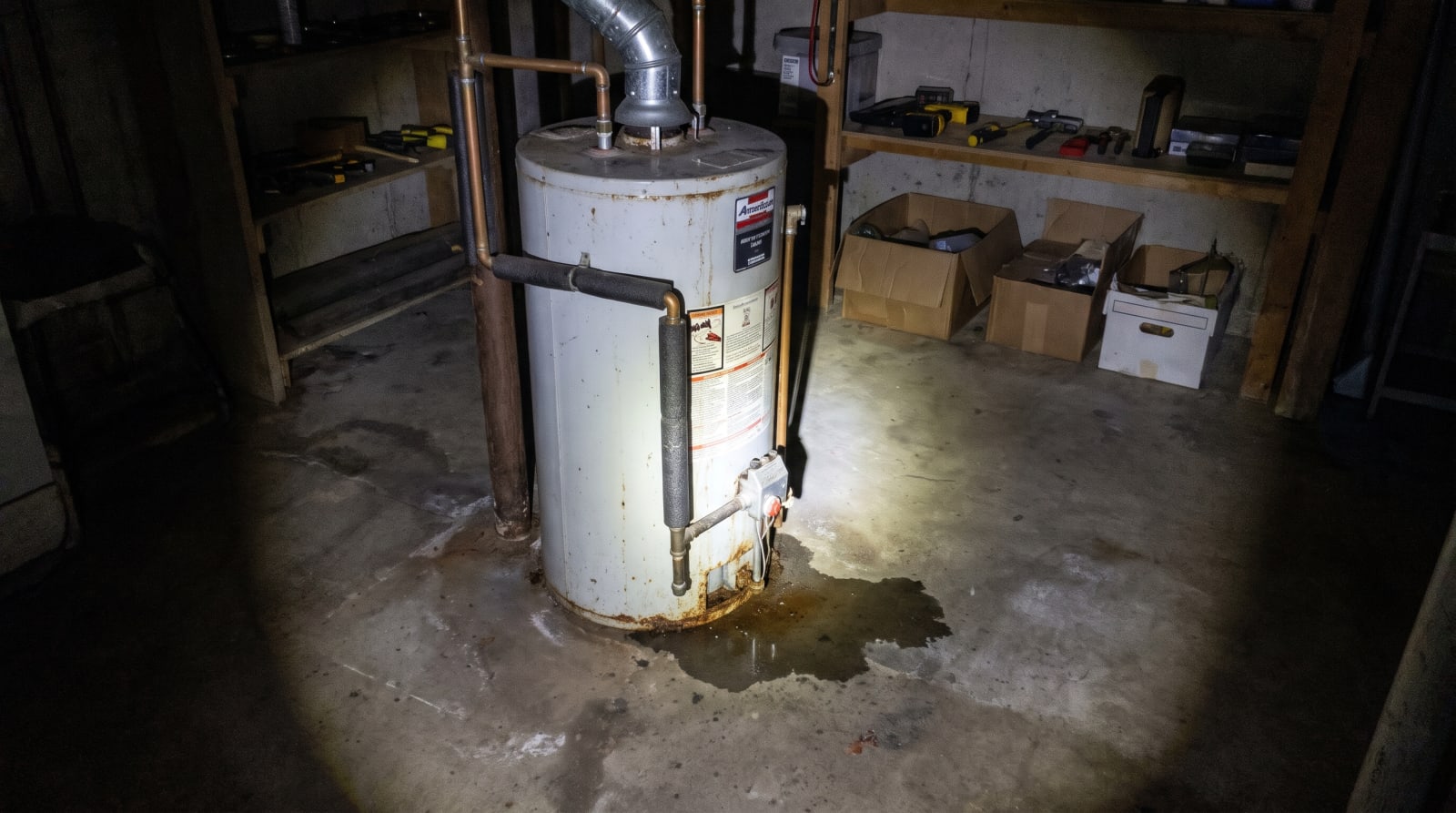
No hot water on a cold Spokane morning, a puddle under the tank, or a water heater that rumbles and pops? Most water heater problems give warning signs before they turn into a flooded basement. This page explains what those signs mean, what to do right now, when repair makes sense and when replacement is the smarter move, for tank and tankless, gas and electric units.
📞 Call Now – Water Heater Help in Spokane
What to Do Right Now
If the tank is leaking: turn off the power at the breaker (electric) or turn the gas control to OFF (gas), then close the cold-water supply valve on top of the tank. Keep people and pets away from hot water and wet electrical areas.
If there’s a rotten-egg smell: leave the house right away and call the gas utility or 911 from outside. Don’t try to find the leak first.
If water drips from the relief-valve pipe: never cap, plug or block it. It’s a safety device, and the drip is a sign that something needs checking.
If there’s simply no hot water: check the breaker (electric) or the pilot/status light (gas) using the instructions on the unit’s label.
Call a plumber if the tank itself is leaking, the relief valve keeps discharging, or the fix involves gas lines, venting or wiring.
Sources: This Old House, U.S. Consumer Product Safety Commission · Checked: November 7, 2026
In this guide: Warning signs · Why water heaters fail in Spokane homes · Repair or replace · What a plumber does · What affects the cost · Safety · How the call works · Video · Common questions
Warning Signs Your Water Heater Needs Attention
| Problem | What it usually means | How urgent |
|---|---|---|
| Water pooling around the base of the tank | A loose fitting, a leaking drain valve, or a corroded tank | High – shut off water and power/gas |
| Water dripping from the relief-valve discharge pipe | A faulty T&P valve, high water pressure, or a temperature set too high | High – have it checked soon |
| No hot water at all | Tripped breaker, failed heating element, pilot or ignition problem, faulty gas valve | Medium – check breaker or pilot first |
| Hot water runs out quickly or is only lukewarm | Sediment buildup, a failed lower element, a thermostat issue, or an undersized unit | Medium |
| Rumbling, popping or banging from the tank | Sediment on the tank bottom overheating and boiling | Low to medium |
| Rusty or discolored hot water, rust on the tank | Corrosion inside the tank or a worn anode rod | Medium – a corroded tank can start leaking |
| Rotten-egg smell near a gas unit | Possible gas leak | Emergency – leave the home and call the gas utility |
Source: This Old House – How to Diagnose and Repair a Leaking Water Heater; This Old House – Water Heater Safety 101 · Checked: November 7, 2026
Why Water Heaters Struggle in Spokane Homes
Water heating is a big job in any home. The U.S. Department of Energy estimates it typically accounts for about 18% of a home’s energy use, the second-largest energy expense. A few local conditions make that job harder:
- Cold incoming water in winter. When the water entering the tank is colder, the heater has to run longer to reach its set temperature. A unit that kept up in summer may start running out of hot water in January.
- Units in garages, basements and crawl-space-adjacent rooms. Water heaters in cold, unheated spaces lose more heat, and nearby pipes are more exposed during cold snaps.
- Snow and venting. Gas water heaters need clear vents. This Old House advises keeping vents clear of obstructions, including snow and debris, and installing carbon monoxide detectors near the water heater.
- Older homes. Many Spokane neighborhoods, such as the South Hill, Browne’s Addition and Hillyard, have older houses where water heaters may sit in tight spaces, share older venting, or connect to aging pipes and valves.
- Sediment. Minerals settle at the bottom of a tank over time. The Department of Energy suggests draining a quart of water from the tank every three months, following the manufacturer’s directions, to remove sediment.
Source: U.S. Department of Energy – Energy Saver Guide; This Old House – Water Heater Safety 101 · Checked: November 7, 2026
Repair or Replace?
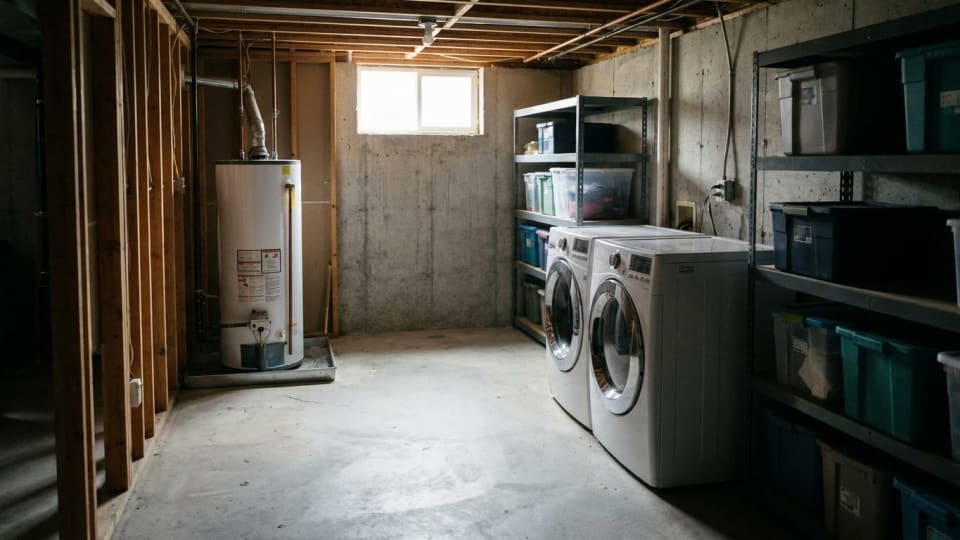
Many water heater problems are repairable. According to This Old House, a faulty T&P valve or drain valve can be replaced, loose connections can be tightened, thermocouples and gas valves on gas units can often be adjusted or replaced, and failed heating elements on electric units can be swapped out. A corroded tank, however, can’t be repaired. The whole water heater has to be replaced.
Age matters too. The Department of Energy notes that most storage (tank) water heaters last 10–15 years, while tankless water heaters can last more than 20 years. Replacement usually makes more sense when the tank itself is leaking, the unit is near the end of that range, repairs keep coming back, or the household now needs more hot water than the unit can deliver. For a side-by-side look, see Tank vs. Tankless Water Heaters in Spokane.
Source: This Old House – How to Diagnose and Repair a Leaking Water Heater; U.S. Department of Energy – Energy Saver Guide · Checked: November 7, 2026
What a Plumber Typically Does
| Step | What it involves |
|---|---|
| Diagnosis | Finding where water is coming from (fittings, valves, tank), checking the T&P valve, water pressure, thermostat settings, elements or gas controls |
| Pressure check | This Old House recommends household water pressure under 80 psi; a pressure-reducing valve or an expansion tank may be suggested if it’s high |
| Repair | Replacing a valve, element, thermostat, thermocouple or fitting when the tank is still sound |
| Replacement | Draining and disconnecting the old unit, installing the new one with correct water, gas or electrical connections, venting and relief-valve discharge pipe |
| Upgrade options | Discussing tank vs. tankless or a heat pump water heater, which the Department of Energy says can be two to three times more energy efficient than a conventional electric model |
Source: This Old House; U.S. Department of Energy – Energy Saver Guide · Checked: November 7, 2026
What Affects the Cost
- Repair vs. replacement – a single valve or element is a very different job from a full replacement.
- Type of unit – tank or tankless, gas or electric, standard or heat pump.
- Size and location – larger tanks and tight spaces (closets, crawl-space access, attics) take more labor.
- Venting, gas and electrical work – switching to tankless or a different fuel may require changes to gas lines, venting or electrical service.
- Code items – an expansion tank, pressure-reducing valve or updated discharge piping may be needed.
- Permits and haul-away – Spokane Municipal Code 17F.100.020 lists electric water heaters among the items that need a permit to install, alter, replace or remove. Ask what permits apply and whether removal of the old unit is included.
For typical price ranges and what drives them, see Water Heater Replacement Cost in Spokane. Always ask for a written estimate before work starts. Source: City of Spokane – Municipal Code 17F.100.020, Permit Required · Checked: November 7, 2026
How the Call Works
- Call and describe the problem – leak, no hot water, noises, age and type of unit.
- The call is connected to an independent local plumbing provider serving the area.
- Talk to the plumber directly, ask for a written estimate, and decide whether to go ahead.
Before hiring: check Washington L&I contractor registration. The Washington State Department of Labor & Industries’ Verify tool shows whether a business has an active contractor registration and whether a tradesperson doing plumbing work is certified in Washington. Source: Washington L&I – Verify a Contractor, Tradesperson or Business · Checked: November 7, 2026
Video from Ask This Old House: plumbing and heating expert Richard Trethewey walks through how to find where a water heater is leaking and which problems can be repaired:
Common Questions
How long does a water heater last?
The U.S. Department of Energy says most storage water heaters last 10–15 years and tankless units can last more than 20 years. Regular maintenance, such as draining sediment, helps a unit reach the upper end of that range.
What temperature should a water heater be set to?
Both the U.S. Consumer Product Safety Commission and the Department of Energy point to 120°F. It lowers the scald risk and also reduces energy use.
Water is dripping from the pipe on the side of the tank. Is that serious?
That pipe is the relief-valve discharge line. According to This Old House, dripping can point to a faulty valve, excessive water pressure or a temperature setting that’s too high, and continuous dripping is a reason to call a plumber. Never cap or plug the pipe.
Can a leaking tank be patched?
If the leak comes from a fitting or valve, it can often be repaired. If the tank itself is corroded and leaking, it can’t be repaired and the water heater needs to be replaced. See Water Heater Leaking? What to Do First.
Is no hot water an emergency?
Usually not, unless it comes with a leak, a gas smell or signs of electrical trouble. For help deciding, see Plumbing Emergency or Can It Wait? and emergency plumber in Spokane.
Areas served: Spokane neighborhoods including South Hill, North Spokane, Hillyard, Browne’s Addition, Indian Trail and Five Mile Prairie, plus nearby Spokane Valley, Liberty Lake, Airway Heights, Cheney, Mead and Medical Lake. Related services: leak detection and drain cleaning.
Water Heater Trouble in Spokane?
One call connects to an independent, local plumbing provider serving Spokane and Spokane Valley for leaking tanks, no hot water, repairs and replacements.
📞 Call Now – Get Your Hot Water Back
Spokane Home Help is a referral service, not a plumbing contractor.
Related Articles
- All water heater articles →
- Water Heater Leaking? What to Do First
- Water Heater Replacement Cost in Spokane
- Tank vs. Tankless Water Heaters in Spokane
- Plumbing Emergency or Can It Wait?
Spokane Home Help is a referral service and is not a plumbing contractor. Calls may be connected to an independent, third-party plumbing provider serving the caller’s area. Spokane Home Help does not perform plumbing work and is not responsible for the work, pricing, licensing or availability of any provider. Before work begins, confirm the provider’s Washington L&I registration and ask for a written estimate.