
The Short Answer
Before the cold: disconnect garden hoses, drain outdoor faucets and irrigation lines, insulate pipes in crawl spaces, garages and along exterior walls, and make sure everyone in the home knows where the main water shutoff valve is.
During a cold snap: keep the heat at the same setting day and night (never below 55°F, even when away), open sink cabinets on outside walls, and let a faucet on an at-risk line run at a small trickle.
If a pipe freezes: leave the faucet open and warm the pipe gently with a hair dryer or space heater. Never use an open flame.
Call a plumber if the frozen section can’t be reached, is inside a wall, or the pipe is already cracked.
Sources: City of Spokane Water Department, American Red Cross · Checked: November 7, 2026
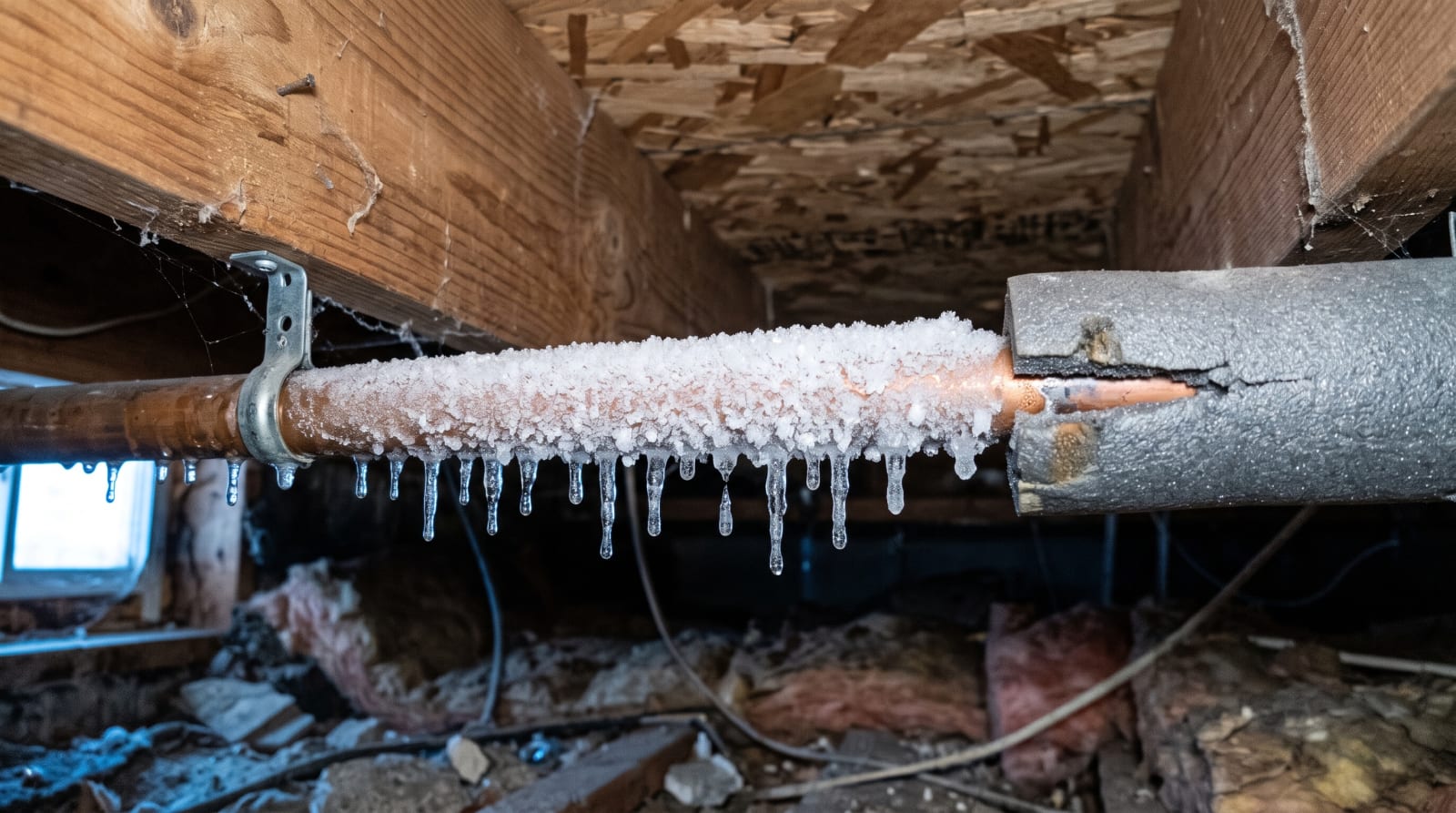
Spokane winters regularly bring stretches of single-digit temperatures, and every hard freeze puts home plumbing under pressure. Water expands as it turns to ice, and the force can split copper, PEX or galvanized pipe. The frustrating part: the leak often doesn’t appear until the ice melts, sometimes days later. This guide covers where pipes freeze, what to do before and during a cold snap, how to thaw a frozen pipe safely, and when it’s time to bring in a licensed plumber.
In this guide: Why pipes freeze · Where pipes are most at risk · Before the first hard freeze · Pipe insulation options · During a cold snap · Leaving home in winter · Signs of a frozen pipe · How to thaw a pipe safely · Spokane-specific notes · Common questions · Quick summary
Why Do Pipes Freeze and Burst?
According to the American Red Cross, water expands as it freezes, and that expansion puts tremendous pressure on whatever holds it, metal or plastic. No pipe is strong enough to stop it. The pipes most exposed are outdoor hose bibs, sprinkler lines, and supply lines in unheated spaces such as crawl spaces, attics, garages and kitchen cabinets on exterior walls. Source: American Red Cross – Preventing & Thawing Frozen Pipes · Checked: November 7, 2026
Where Pipes Are Most at Risk in Spokane Homes
| Location | Why it’s at risk | What to do |
|---|---|---|
| Crawl spaces & unheated basements | Cold air enters through vents and gaps in the foundation | Insulate pipes, seal openings around the foundation, windows and doors |
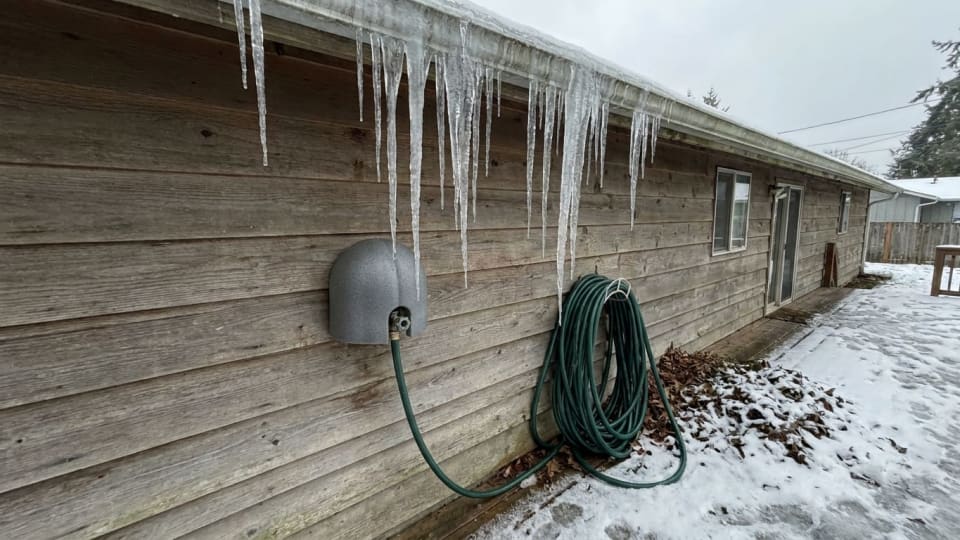
| Outdoor faucets (hose bibs) | A hose left attached traps water in the valve | Disconnect hoses, close the inside shutoff, drain the faucet |
| Sprinkler / irrigation lines | Shallow lines full of water | Shut off and drain the system before freezing weather |
| Garages | Often unheated, doors open often | Keep garage doors closed, insulate any supply lines |
| Sink cabinets on exterior walls | Cabinet doors block warm room air | Open cabinet doors on very cold nights |
| Pipes near basement windows | Glass lets cold reach the pipe | Add pipe insulation near windows |
Source: City of Spokane Water Department – Frozen Pipes; American Red Cross · Checked: November 7, 2026
Before the First Hard Freeze: 6-Step Checklist
- Find the main water shutoff valve and show every adult in the household where it is. The City of Spokane lists this as the first step, because shutting off the water quickly limits damage. See How to Shut Off Your Main Water Valve.
- Disconnect and drain garden hoses. Even freeze-resistant outdoor faucets can crack when a hose is left attached.
- Close the inside valve to outdoor faucets and open the outside faucet so remaining water can drain and expand without breaking the pipe.
- Drain underground irrigation systems.
- Insulate exposed pipes in crawl spaces, garages, attics and along exterior walls. Foam pipe sleeves from any hardware store are inexpensive; heat tape or heating cable adds extra protection on problem runs.
- Seal drafts around the foundation, crawl-space vents, basement windows and where pipes enter the house.
Pipe Insulation Options Compared
The American Red Cross lists three common ways to protect pipes in unheated areas, plus a longer-term fix for lines that freeze again and again. In a multi-day Spokane cold snap, the lighter options are a starting point, not the whole answer.
| Option | How it works | Suited for | Keep in mind |
|---|---|---|---|
| Foam pipe sleeves | Insulating sleeves made for water pipes slip over the line | Exposed runs in crawl spaces, garages and basements | Cover both hot and cold lines, and seal gaps where pipes pass through walls or floors |
| UL-listed heat tape or heat cable | An electric cable installed along the pipe adds warmth | Problem runs that have frozen before | Use only UL-listed products and follow the manufacturer’s installation instructions |
| Newspaper wrap | A layer of paper adds a little insulation | A short-term stopgap | The Red Cross describes it as useful in areas with mild freezes, so it is not enough on its own in a hard Spokane freeze |
| Relocating the pipe | The line is moved out of an exterior wall or unheated space | Pipes that freeze every winter | A larger plumbing project; see repiping in Spokane. A written, itemized estimate is the only reliable figure for the cost |
Source: American Red Cross – Preventing & Thawing Frozen Pipes · Checked: November 9, 2026
During a Cold Snap
- Keep the thermostat steady. The Red Cross recommends keeping the same temperature day and night during extreme cold. The heating bill may rise a little, but a burst pipe costs far more.
- Going away? Leave the heat on, set no lower than 55°F (Red Cross).
- Heat every room that has plumbing. Pipes in unheated rooms are the ones that freeze.
- Open sink cabinets on exterior walls so warm air reaches the pipes.
- Let a faucet trickle on a line served by exposed pipes. City guidance shared with local media describes a steady stream slightly larger than the lead of a pencil.
- Leave the water meter box lid closed and don’t clear snow off it; the snow helps insulate the meter.
Leaving Home for the Winter or a Holiday Trip
In an empty house, nobody notices a faucet slowing down or water spreading across a floor. Before leaving for more than a night or two in freezing weather:
- Leave the heat on at 55°F or higher. Both the City of Spokane Water Department and the Red Cross use 55°F as the minimum, even when nobody is home.
- Ask a neighbor or friend to check on the house, as the City of Spokane recommends, and show that person where the main shutoff valve is.
- Close garage doors, crawl-space vents and access doors so cold air can’t reach plumbing in unheated areas.
- Consider closing the main valve for a longer absence. It limits how much water can escape if a pipe breaks. Check the water heater’s manual before cutting its water supply for an extended period.
Source: City of Spokane Water Department; American Red Cross · Checked: November 9, 2026
Signs a Pipe May Be Frozen
- Only a trickle, or nothing, comes out when a faucet is turned on
- Water pressure in a sink or shower drops sharply in freezing weather
- Frost visible on an exposed pipe
- A toilet doesn’t refill after flushing
The Red Cross notes that frozen pipes are most likely against exterior walls or where the water service enters the home through the foundation, and that if one pipe has frozen, others may have too, so check every faucet.
How to Thaw a Frozen Pipe Safely
- Open the faucet the pipe feeds. As the ice melts, running water helps melt the rest.
- Apply gentle heat starting from the faucet end and working back toward the frozen section: a hair dryer, heat lamp, space heater (kept a safe distance away), electric heating pad or warm towels.
- Keep heating until full pressure returns.
- Check for leaks once water flows. A pipe that split while frozen will start leaking as soon as it thaws.
The City of Spokane Water Department adds two points worth following. First, shut off the water, or at least confirm the shutoff valve works, before thawing, so a split pipe doesn’t flood the area the moment the ice clears. Second, thaw slowly with low heat, such as a hair dryer or a heating pad on low, because rapid temperature changes can crack or burst pipes. Source: City of Spokane Water Department · Checked: November 9, 2026
Call a licensed plumber if the frozen area can’t be found or reached, if it’s inside a wall, or if the pipe is visibly cracked or bulging. If water starts spraying, shut off the main valve first, then follow the steps in What to Do When a Pipe Bursts. For urgent situations, see emergency plumber in Spokane.
Video from Ask This Old House: plumbing and heating expert Richard Trethewey shows how to insulate pipes, shut off outdoor spigots and protect sink lines on exterior walls:
Spokane-Specific Notes: Crawl Spaces, No Water and Who to Call
Close crawl-space vents during freezing weather
The City of Spokane advises closing and sealing vents, garage doors and crawl spaces to block cold air, especially where plumbing runs through unheated areas. Where supply lines run through a vented crawl space, covering those vents for the coldest months and making sure the access door shuts tight protects pipes that are hard to reach.
No water at any faucet?
If every faucet in the house is dry during a hard freeze, the frozen spot may be where the water service enters through the foundation, one of the likeliest freeze points the Red Cross names. It can also be a utility-side issue. City of Spokane water customers can reach the City of Spokane Water Department at 509-625-7800; homes served by another water provider should call the utility listed on the water bill. For a frozen line on the home’s side, see frozen pipe repair in Spokane.
After the thaw
Check every faucet, because one frozen pipe can mean others froze too. Then watch crawl spaces, basement ceilings and under-sink cabinets for drips over the following days. With every fixture turned off, a water meter that still shows movement can point to a hidden leak; leak detection in Spokane covers the next steps. Source: City of Spokane Water Department; American Red Cross · Checked: November 9, 2026
Common Questions
Does a frozen pipe always burst?
No. A frozen pipe doesn’t always burst, and thawing it quickly and gently reduces the risk. That’s why it’s worth acting as soon as a faucet slows to a trickle in freezing weather.
Why did a leak show up days after the cold snap ended?
While the pipe was frozen, the ice acted as a plug. If the pipe split during the freeze, nothing could get past the ice until it melted. Once it thawed, the crack started leaking. After any deep freeze, check crawl spaces, basements and ceilings below bathrooms for new water stains.
Which faucet should drip?
The one served by exposed or exterior-wall pipes. The Red Cross recommends letting cold water drip from faucets served by exposed pipes, since moving water is much less likely to freeze.
Is it safe to thaw a pipe with a torch?
No. Both the City of Spokane and the Red Cross warn against open flames, including propane torches and kerosene heaters, because of the fire risk. Use electric heat sources only, and never leave them unattended.
Should the faucet drip hot or cold water, and how much?
Cold. Mississippi State University Extension recommends running the cold water at a steady trickle, roughly the rate that would fill a gallon pitcher in about an hour, and dripping the faucet farthest from the water meter. It suggests starting when forecasts show temperatures staying below freezing for several days and continuing until temperatures are consistently above freezing. Source: Mississippi State University Extension – How to Properly Drip a Water Faucet · Checked: November 9, 2026
Can antifreeze be poured into pipes or sprinkler lines?
Not unless the manufacturer or installer specifically directs it. The Red Cross advises draining swimming pool and sprinkler supply lines according to the manufacturer’s or installer’s directions, and warns that antifreeze is harmful to people, pets, wildlife and landscaping. Source: American Red Cross · Checked: November 9, 2026
Quick Summary
- Know where the main shutoff valve is before winter starts.
- Disconnect hoses, drain outdoor faucets and irrigation lines.
- Insulate pipes in crawl spaces, garages and exterior walls.
- During cold snaps: steady heat (55°F minimum when away), open cabinets, let one faucet trickle.
- Thaw with gentle electric heat only, never an open flame.
- Call a plumber if the pipe is cracked, inside a wall or can’t be reached.
Frozen or Burst Pipe in Spokane?
One call connects to an independent, local plumbing provider serving Spokane and Spokane Valley for frozen pipes, burst lines and winter leaks.
📞 Call Now – Connect With a Spokane Plumber
Spokane Home Help is a referral service, not a plumbing contractor.
Related Articles
- Printable Spokane Winter Plumbing Checklist (PDF)
- What to Do When a Pipe Bursts: First Steps
- How to Shut Off Your Main Water Valve
- How to Check Your Home for a Hidden Water Leak
Spokane Home Help is a referral service and is not a plumbing contractor. Calls may be connected to an independent, third-party plumbing provider serving the caller’s area. Spokane Home Help does not perform plumbing work and is not responsible for the work, pricing, licensing or availability of any provider. Before work begins, confirm the provider’s Washington L&I registration and ask for a written estimate.