
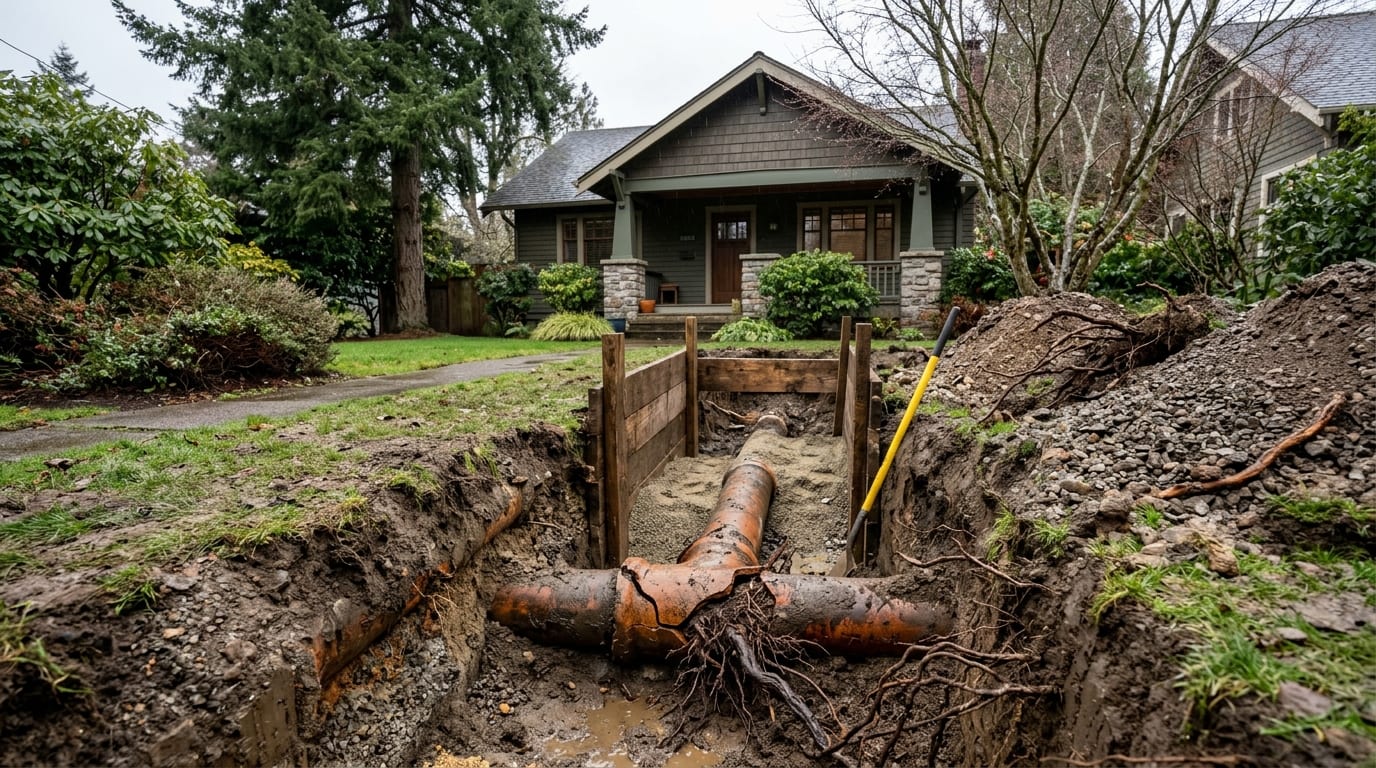
Several drains backing up at once, a gurgling toilet or a sewage smell in the basement can all point to a problem in the main sewer line. In Spokane, that line is usually an older clay or cast-iron pipe running under the yard, and tree roots, cracks and sagging sections are common causes. This page explains the warning signs, how a plumber finds the problem, the main repair options, and who is responsible for the side sewer in the City of Spokane.
📞 Call Now – Sewer Line Help in Spokane
What to Do Right Now
Sewage coming up a drain? Stop running water, flushing toilets and using the washer or dishwasher. Every gallon used upstairs has to go somewhere, and a blocked line sends it back up through a basement or ground-floor drain.
Keep people and pets away from sewage water, and don’t try to clean a large backup with bare hands.
Don’t pour chemical drain cleaners into a backed-up main line. They rarely reach the blockage and make the water more hazardous for whoever opens the line.
Call a plumber to clear the line and, ideally, run a camera through it to see what caused the backup.
Checked: November 7, 2026
In this guide: Warning signs · What the signs usually mean · Why Spokane sewer lines fail · Camera inspection · Repair options · Who is responsible · What affects cost · How the call works · Video · Common questions
Warning Signs of a Sewer Line Problem
A single slow sink is usually a local clog. A sewer line problem tends to show up in more than one place, because every drain in the house empties into the same main line. Watch for:
- Several fixtures draining slowly or backing up at the same time
- Water or sewage coming up through a floor drain, tub or shower when a toilet is flushed or the washer drains
- Gurgling sounds from toilets or drains
- A sewage odor inside the house or in the yard
- Wet, sunken or unusually green patches of lawn along the path of the line
- Clogs that come back again and again after drain cleaning
What the Signs Usually Mean
| Problem | What it usually means | How urgent |
|---|---|---|
| Sewage backing up into a tub, shower or floor drain | The main line is blocked and wastewater has nowhere to go | Urgent – stop using water and call now |
| Several drains slow at once | A partial blockage in the main line, often roots or buildup | Soon – before it becomes a full backup |
| Gurgling toilets and drains | Air pushed back through the system by a restriction in the line | Soon |
| Sewage smell indoors or outside | A cracked pipe, a loose cleanout cap or a dry trap | Soon – have it checked |
| Soggy or sunken spot in the yard | A leak or break in the buried line | Soon – the ground can keep settling |
| Clogs that keep returning after cleaning | Roots, a sag (belly) or a damaged section that cleaning can’t fix | Plan a camera inspection |
For a closer look at each symptom, see Signs of a Sewer Line Problem.
Why Sewer Lines Fail in Spokane Homes
- Tree roots. Roots look for water and can work into joints and small cracks in older pipe. Once inside, they catch paper and grease and grow into a blockage. It is a common problem wherever mature trees grow near an older sewer line.
- Older pipe materials. Many older homes were built with clay tile or cast-iron sewer pipe. Clay joints can shift and let roots in; cast iron can corrode, scale up on the inside and crack.
- Sags (bellies). When soil settles under a section of pipe, a low spot forms where water and waste collect.
- Ground movement and freeze-thaw cycles that stress joints over many winters.
- Grease, wipes and foreign objects that build up in the line, especially where it is already rough or narrowed. See Why Does My Drain Keep Clogging?
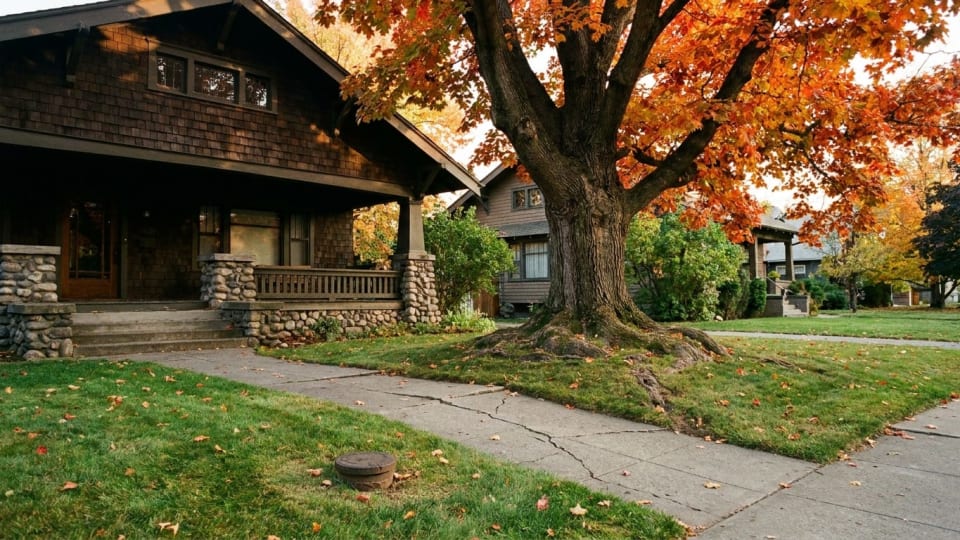
Camera Inspection: Find the Problem Before Digging
A sewer camera inspection sends a waterproof camera on a flexible cable through a cleanout and down the line. It shows what is wrong (roots, a crack, a sag, a collapse or an offset joint), how far from the house it is, and roughly how deep. That information decides whether the line needs cleaning, a spot repair or a larger job, and it helps avoid paying for the wrong fix. A camera inspection is also a sensible step before buying an older home.
Repair Options: Spot Repair, Trenchless or Replacement
- Cleaning and root cutting. Clears the blockage and restores flow. If roots got in through a cracked or separated joint, they can grow back, so this is often paired with a camera inspection to judge the pipe’s condition.
- Spot (point) repair. Digging down to one damaged section and replacing just that piece. It works when the rest of the line is in reasonable shape.
- Trenchless repair. Methods such as pipe lining (a new liner cured inside the old pipe) or pipe bursting (pulling new pipe through the path of the old one) that need only small access pits. They can mean less damage to lawns, driveways and landscaping, but not every line is a good candidate. Collapsed sections, severe sags and some layouts still call for digging.
- Full replacement. Excavating and replacing the line when it is badly damaged along much of its length.
Who Is Responsible for the Side Sewer in Spokane?
The pipe that carries wastewater from a house to the public sewer is called the side sewer. The City of Spokane’s Side Sewer Installation Handbook defines it as the sewer that begins about two feet outside the building’s wall or foundation and carries wastewater from the building drain to a public or private sewer. The handbook states that the property owner is responsible for the maintenance and repair of the entire side sewer, including the portions located within the public right-of-way. Source: City of Spokane – Side Sewer Installation Handbook (2025) · Checked: November 7, 2026
The City’s Side Sewer Connection page also notes that side sewer installations require a sewer connection permit issued by the City, that work in the public right-of-way requires a licensed, bonded contractor, and it links a Side Sewer Search tool for looking up side sewer locations. Homes outside City of Spokane limits, including Spokane Valley and other nearby communities, follow the rules of the sewer utility that serves the address, so check with that utility. Source: City of Spokane – Side Sewer Connection · Checked: November 7, 2026
What Affects the Cost of Sewer Line Repair?
Sewer repairs vary widely, and a reliable number only comes after a camera inspection. The main factors are:
- The length and depth of the line, and how far the damage is from the house
- The repair method: cleaning, spot repair, trenchless lining or bursting, or full replacement
- What sits on top of the line: lawn, driveway, patio, mature trees or the street
- Pipe material and overall condition, and whether there is an accessible cleanout
- Permits, inspections and any work in the public right-of-way
- Restoring landscaping, concrete or pavement afterward
Ask for a written estimate that spells out the method, what is included (permits, restoration, cleanout installation) and what could change the price once digging starts. For large jobs, a second opinion based on the same camera footage is reasonable.
How the Call Works
- Call and describe the problem – which drains are affected, whether sewage is backing up, and where the home is.
- The call is connected to an independent local plumbing provider serving the area.
- Talk to the plumber directly, ask for a written estimate, and decide whether to hire them.
Before hiring: check Washington L&I contractor registration. The Washington Department of Labor & Industries’ Verify tool shows whether a business has an active contractor registration and bond, whether a tradesperson is certified, and whether there are safety citations or lawsuits against the bond. Source: Washington L&I – Verify a Contractor, Tradesperson or Business · Checked: November 7, 2026
Video from This Old House: a look at upgrading the water and sewer lines that connect a house to the street:
Common Questions
Is a sewer backup an emergency?
Yes. Sewage coming into the house is a health hazard and gets worse every time water is used. Stop using water and see emergency plumbing in Spokane. For help deciding what can wait, see Is It a Plumbing Emergency or Can It Wait?
Can roots be cleared without replacing the pipe?
Often, yes. Cutting roots out of the line restores flow. But roots entered through an opening in the pipe, and that opening is still there afterward, so they can grow back. A camera inspection after cleaning shows whether a spot repair or lining would be the longer-term fix.
Is trenchless repair always possible?
No. Lining and pipe bursting depend on the pipe’s condition, shape and layout. A fully collapsed section, a deep sag or certain connections may still require excavation. The camera inspection tells a plumber which methods fit the line.
Who pays for a broken side sewer under the sidewalk?
Inside City of Spokane limits, the City’s Side Sewer Installation Handbook places maintenance and repair of the entire side sewer on the property owner, including the part in the public right-of-way. Rules can differ for homes served by another utility, so confirm with the utility for the address.
How can the next backup be prevented?
Keep grease, wipes (even ones labeled flushable) and paper towels out of drains, know where the sewer cleanout is, and act on early signs like gurgling or several slow drains rather than waiting for a full backup.
Areas Served
Homeowners across Spokane can call, including the South Hill, North Spokane, Hillyard, Browne’s Addition, Indian Trail and Five Mile Prairie, as well as Spokane Valley, Liberty Lake, Airway Heights, Cheney, Mead and Medical Lake.
Sewer Backup or Recurring Clogs in Spokane?
One call connects to an independent, local plumbing provider serving Spokane and Spokane Valley for sewer backups, root problems, camera inspections and sewer line repair.
📞 Call Now – Connect With a Spokane Plumber
Spokane Home Help is a referral service, not a plumbing contractor.
Related Articles
- All sewer line articles →
- Signs of a Sewer Line Problem
- Why Does My Drain Keep Clogging?
- Is It a Plumbing Emergency or Can It Wait?
- Drain Cleaning in Spokane
Spokane Home Help is a referral service and is not a plumbing contractor. Calls may be connected to an independent, third-party plumbing provider serving the caller’s area. Spokane Home Help does not perform plumbing work and is not responsible for the work, pricing, licensing or availability of any provider. Before work begins, confirm the provider’s Washington L&I registration and ask for a written estimate.