
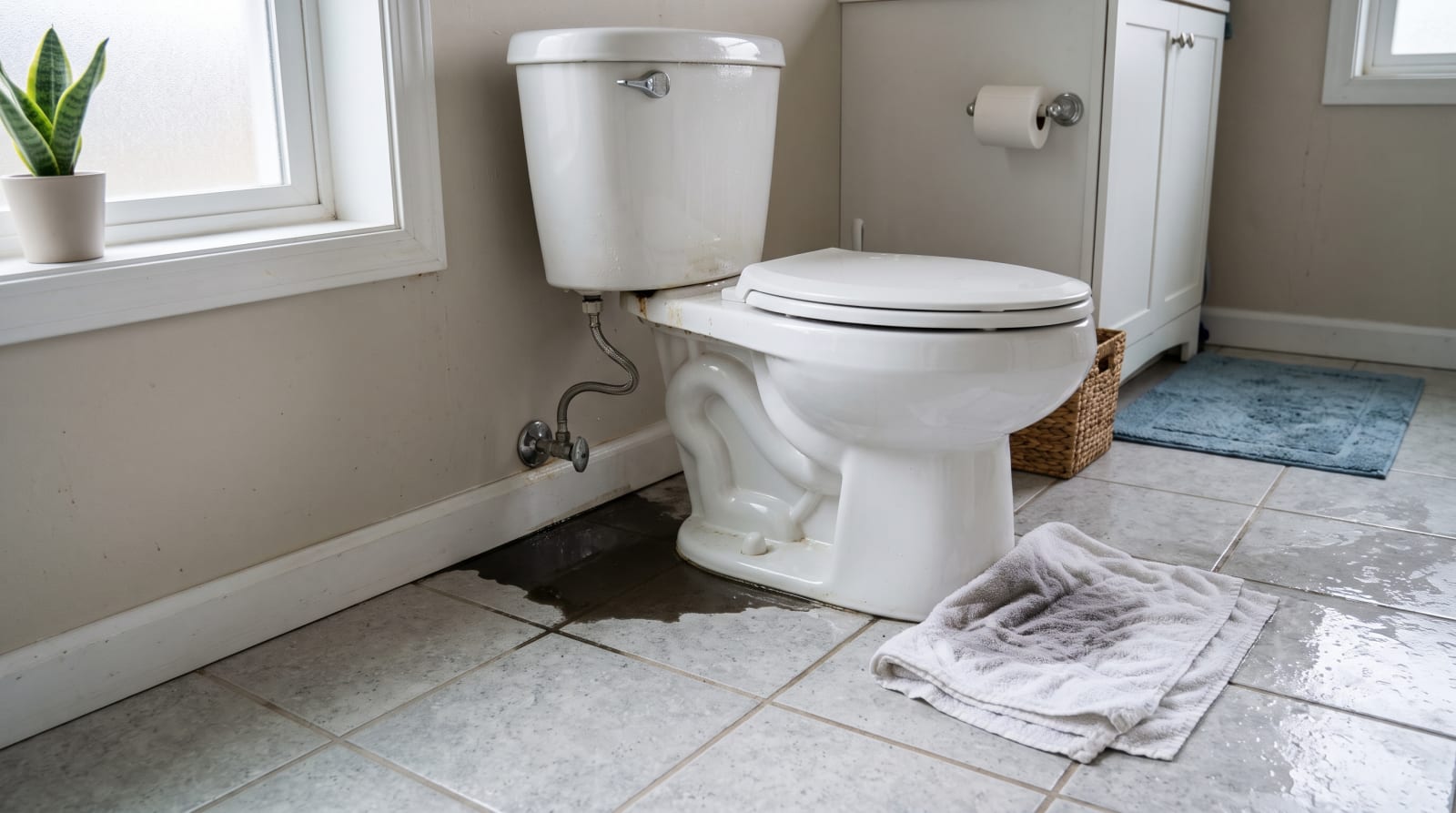
A toilet that runs all night, rocks on the floor or clogs every few days is easy to put off, but small toilet problems waste water and can damage floors over time. A leak at the base can quietly soak the subfloor, and a worn flapper can send thousands of gallons down the drain in a year. Spokane Home Help connects callers with independent, local plumbing providers serving Spokane and nearby communities for running, leaking, clogged and broken toilets.
📞 Call Now – Toilet Repair Help
What to Do Right Now
If the bowl is about to overflow, close the shutoff valve behind the toilet. Turn it clockwise until the tank stops filling. Don’t flush again.
If water is pooling at the base, stop using that toilet. Each flush can push more water under the toilet and into the floor.
Try a flange plunger on a simple clog. If a few firm plunges don’t clear it, stop.
Test a running toilet with food coloring. Put a few drops in the tank; if color shows up in the bowl within 10 minutes, the tank is leaking into the bowl.
Call a plumber if the toilet leaks at the base, rocks, keeps clogging, or other drains back up when it’s flushed.
Sources: U.S. EPA WaterSense, Spokane County · Checked: November 7, 2026
In this guide: Common toilet problems · Causes in Spokane homes · What a plumber typically does · What affects the cost · Safety · How the call works · Video · Common questions
Common Toilet Problems and What They Mean
| Problem | What it usually means | How urgent |
|---|---|---|
| Toilet runs or refills on its own | A worn or misaligned flapper, a chain that’s too short, or a fill valve set too high | Low to moderate – wastes water until fixed |
| Weak flush or has to be flushed twice | Low water level in the tank, a chain with too much slack, or buildup in the rim holes | Low |
| Clogs often | Wipes or paper products, an object stuck in the trap, or a problem further down the drain | Moderate |
| Water on the floor around the base | A failed wax ring seal, loose closet bolts or a cracked bowl | High – stop using it |
| Toilet rocks or moves | Loose bolts, a damaged flange or a weakened subfloor | Moderate – can break the seal |
| Leak from the tank bolts or supply line | Worn tank gaskets, a loose connection or an aging supply line | Moderate to high |
| Tub or shower drain backs up when the toilet is flushed | A blockage in the main line | High – see drain cleaning |
The U.S. EPA’s WaterSense program notes that worn toilet flappers are among the most common household leaks, that a worn flapper can leak silently and waste thousands of gallons a year, and that it can make a toilet flush on its own. WaterSense recommends checking the flapper periodically and replacing it at least every five years. Source: U.S. EPA WaterSense – Fix a Leak Week · Checked: November 7, 2026
Common Causes of Toilet Trouble in Spokane Homes
Worn tank parts. Flappers, fill valves and gaskets are made of rubber and plastic that stiffen and warp with age. The EPA estimates the average household’s leaks can waste more than 9,300 gallons a year, and that about nine percent of homes have leaks wasting 50 gallons or more a day. Source: U.S. EPA WaterSense – Fix a Leak Week · Checked: November 7, 2026
Wipes and paper products. Spokane County says that “flushable” products, no matter how they are advertised, do not break down properly in the sewer system. Inside the home, wipes and paper towels can catch in the toilet trap or the drain line and cause repeat clogs. Source: Spokane County – Sewer FAQ · Checked: November 7, 2026
Older toilets and older floors. Many Spokane homes, from Browne’s Addition to the Garland area, still have original or decades-old toilets. WaterSense says older toilets can use as much as six gallons per flush. Older bathrooms may also have flanges or subfloors that have weakened from past leaks, which makes it harder for a toilet to stay sealed.
Problems further down the line. When a toilet clogs again and again, or other fixtures gurgle when it flushes, the cause may be in the main drain rather than the toilet itself. See Why Does My Drain Keep Clogging?
What a Plumber Typically Does
| Repair | Typically used for | What it involves |
|---|---|---|
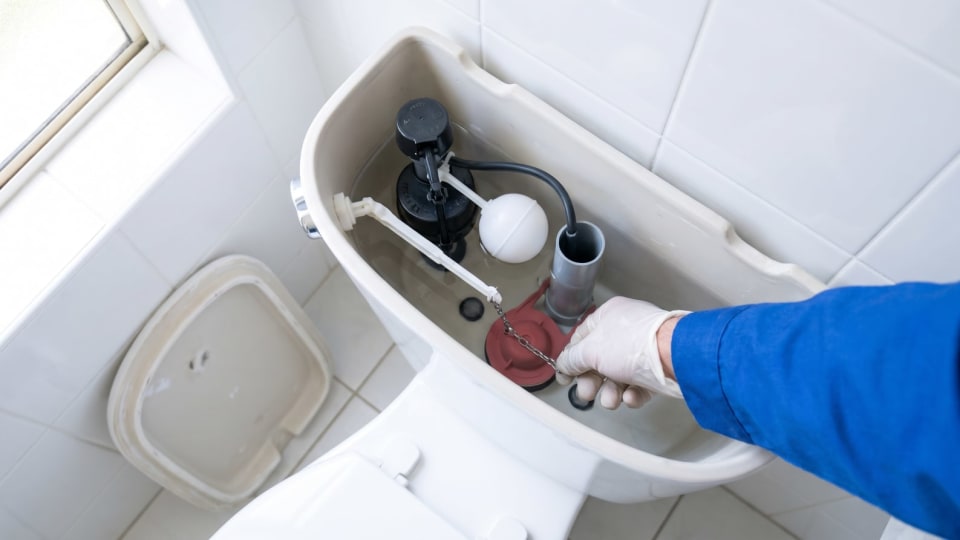
| Flapper and chain replacement | Running toilet, ghost flushing | Fitting a flapper that matches the flush valve size and adjusting the chain length |
| Fill valve replacement or adjustment | Constant refilling, slow refill, hissing | Replacing the valve and setting the correct water level |
| Closet auger | Clogs a plunger can’t clear | A toilet auger is fed through the bowl to break up or pull out the clog without scratching the porcelain |
| Pulling the toilet and resetting it | Leaks at the base, rocking, objects stuck in the trap | Removing the toilet, replacing the wax ring and bolts, checking the flange, then reseating it |
| Flange repair | A cracked or broken flange | Repairing or replacing the flange so the toilet can be secured properly |
| Toilet replacement | Cracked bowls or tanks, very old or inefficient toilets | Installing a new toilet and supply line |
When replacing a toilet, a WaterSense labeled model uses 1.28 gallons per flush or less. The EPA estimates that replacing older, inefficient toilets with WaterSense labeled models can save a home around 13,000 gallons of water a year. Source: U.S. EPA WaterSense – Labeled Toilets fact sheet (PDF) · Checked: November 7, 2026
What Affects the Cost of Toilet Repair
- The part that failed: a flapper or fill valve is a smaller job than pulling and resetting the toilet.
- Whether the toilet has to come up: base leaks, rocking and stuck objects usually mean removing it.
- Flange and floor condition: a broken flange or soft subfloor adds work.
- Where the clog is: a clog in the toilet trap is simpler than one further down the drain.
- Repair or replacement: a new toilet adds the cost of the fixture itself, and models vary widely.
- Timing: after-hours and weekend visits usually cost more than scheduled ones.
Ask for a written estimate before work begins, and ask whether it covers parts as well as labor.
How the Call Works
- Call and describe the problem – whether the toilet runs, leaks, rocks or clogs, and whether other drains are affected.
- The call is connected to an independent, local plumbing provider serving the area.
- Talk to the plumber directly. Ask whether a repair or a replacement makes more sense, ask for a written estimate, and decide whether to go ahead.
Before hiring: check Washington L&I contractor registration. The Washington State Department of Labor & Industries’ Verify tool shows whether a business has an active contractor registration and can confirm that a person doing plumbing work holds a Washington plumber certification. It also shows bond and workers’ comp information. Source: Washington L&I – Verify a Contractor, Tradesperson or Business · Checked: November 7, 2026
Video from Ask This Old House: how the parts inside a toilet tank work and how worn components are replaced:
Common Questions
Why does a toilet keep running?
Most often the flapper isn’t sealing, the chain is too short or tangled, or the fill valve is set so high that water spills into the overflow tube. The food coloring test shows whether the tank is leaking into the bowl.
Is water around the base of a toilet serious?
It should be checked soon. First rule out condensation on the tank and drips from the supply line or tank bolts. If water seeps from under the base when the toilet is flushed, the wax seal has likely failed, and continued use can damage the subfloor and the ceiling below.
Repair or replace an old toilet?
Tank parts are usually worth replacing on a toilet that’s otherwise in good shape. A cracked bowl or tank, a toilet that clogs constantly, or a very old model that uses far more water per flush are common reasons to replace it.
Are “flushable” wipes safe for the toilet?
Spokane County’s answer is no: these products, no matter how they are advertised, do not break down properly in the sewer collection system. Put wipes in the trash.
When is a toilet problem an emergency?
An overflow that won’t stop after the shutoff valve is closed, sewage coming up in other drains, or water leaking through the ceiling below a bathroom all need prompt attention. See Emergency Plumber in Spokane and Is It a Plumbing Emergency, or Can It Wait?
Areas served: Spokane neighborhoods including the South Hill, North Spokane, Hillyard, Browne’s Addition, Indian Trail and Five Mile Prairie, plus nearby Spokane Valley, Liberty Lake, Airway Heights, Cheney, Mead and Medical Lake.
Toilet Trouble in Spokane?
One call connects to an independent, local plumbing provider serving Spokane and Spokane Valley for running, leaking, clogged and broken toilets.
📞 Call Now – Connect With a Spokane Plumber
Spokane Home Help is a referral service, not a plumbing contractor.
Related Articles
- All toilet articles →
- Toilet Repair vs. Replacement: A Spokane Homeowner’s Guide
- Why Does My Drain Keep Clogging?
- How to Check Your Home for a Hidden Water Leak
- Drain Cleaning in Spokane
- Garbage Disposal & Fixture Repair in Spokane
Spokane Home Help is a referral service and is not a plumbing contractor. Calls may be connected to an independent, third-party plumbing provider serving the caller’s area. Spokane Home Help does not perform plumbing work and is not responsible for the work, pricing, licensing or availability of any provider. Before work begins, confirm the provider’s Washington L&I registration and ask for a written estimate.