
The Short Answer
Repair it when the problem is inside the tank (running, weak flush, slow refill) or a failed wax ring on an otherwise sound toilet. Those parts wear out; porcelain usually doesn’t.
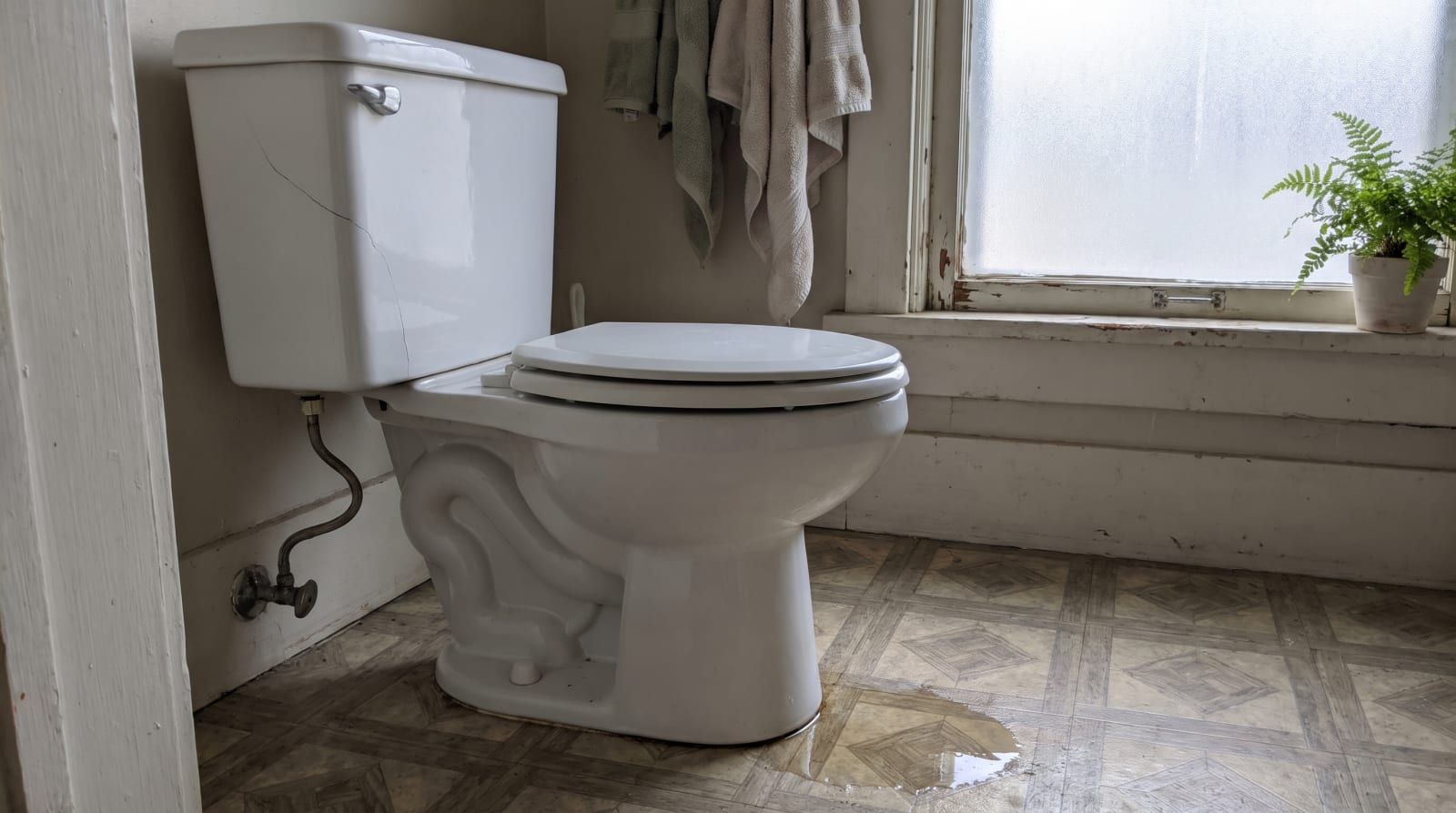
Replace it when the tank or bowl is cracked, it clogs constantly, parts are unavailable, or an older high-volume model keeps needing work.
Check the floor first: a toilet that rocks or leaks at the base may have a broken flange or soft subfloor. A new toilet set on a bad flange will leak again.
Call a plumber for cracks, base leaks, rocking, a shutoff valve that won’t turn, or clogs that come back along with gurgling in other drains.
Sources: U.S. EPA WaterSense, Saving Water Partnership, This Old House · Checked: November 8, 2026
Sooner or later every toilet raises the same question: put another part in it, or pull it out and start over? In Spokane the answer often depends on the house as much as the fixture. Many homes on the South Hill, in Hillyard, Browne’s Addition and older parts of Spokane Valley still have decades-old toilets set on cast-iron drains and wood subfloors. This guide covers what fails, what’s worth repairing, the signs a toilet should be replaced, and the hidden issues under the toilet that change the decision.
For a toilet that’s running, leaking, rocking or clogging right now, see toilet repair in Spokane.
In this guide: What wears out · Problems worth repairing · Signs it’s time to replace · How old is the toilet? · Washington’s efficiency rules · Flange, floor and drain problems · Choosing a new toilet · DIY or call a plumber · What affects the cost · Video · Common questions
What Actually Wears Out in a Toilet
Porcelain rarely wears out. What fails are the rubber and plastic parts that seal and move water, and the seal that connects the toilet to the drain:
- Flapper: the rubber seal at the bottom of the tank; when it warps, the tank keeps refilling.
- Fill valve: refills the tank; a worn one hisses or won’t shut off.
- Flush valve seat: if it’s pitted, a new flapper won’t seal.
- Tank-to-bowl gasket on two-piece toilets.
- Wax ring and closet bolts: the seal to the drain flange in the floor.
- Supply line and shutoff valve behind the toilet.
The U.S. EPA’s WaterSense program points to worn flappers as a common source of toilet leaks and notes that replacing a flapper is a quick, low-cost fix. That’s why the first question with any toilet is whether the problem is a part or the fixture itself. Source: U.S. EPA WaterSense – Residential Toilets · Checked: November 8, 2026
Problems That Are Usually Worth Repairing
| Problem | Usual cause | Repair or replace? |
|---|---|---|
| Runs or refills on its own | Worn flapper, short or tangled chain, fill valve set too high | Repair – tank parts |
| Weak flush, needs a second flush | Low tank water level, chain with too much slack, mineral buildup in rim holes | Repair – adjust or clean |
| Water at the base when flushed | Failed wax ring or loose closet bolts | Repair – reset with new seal, check the flange |
| Occasional clog | Too much paper, wipes, a small object | Repair – plunger or closet auger |
| Hairline crack in tank or bowl | Impact, overtightened bolts, age, freezing | Replace |
| Clogs constantly, even with normal use | Poor bowl design, object lodged in the trapway, or a drain problem | Diagnose first, then often replace |
| Flapper won’t seal even when new | Pitted or corroded flush valve seat | Replace the flush valve or the toilet |
Signs It’s Time to Replace the Toilet
- A crack in the tank or bowl. Cracked porcelain isn’t reliably repairable; patch products are a stopgap at most.
- It clogs constantly. If the drain beyond the toilet is clear and the toilet still clogs with normal use, the bowl design or a lodged object in the trapway may be the cause.
- It’s an older high-volume model. WaterSense says older, inefficient toilets can use as much as 6 gallons per flush, compared with 1.28 gallons or less for a WaterSense labeled model.
- The repairs keep adding up, or parts are hard to find.
- The flush valve seat is damaged and the tank parts can’t seal properly.
- A remodel or accessibility need, such as a taller toilet.
According to WaterSense, toilets account for nearly 30 percent of an average home’s indoor water use, and replacing older toilets with WaterSense labeled models can save nearly 13,000 gallons per home each year. Source: U.S. EPA WaterSense – Residential Toilets · Checked: November 8, 2026
How Old Is the Toilet? How to Check
The Saving Water Partnership, a group of water utilities in western Washington, explains that most toilets have their flush rating stamped or printed on the back wall of the tank, behind the seat, or under the tank lid. If there’s no rating, look for a manufacture date in the same spots. With no marking at all, the toilet is likely as old as the house or its last major bathroom remodel. Source: Saving Water Partnership – How Much Water Does Your Toilet Use? · Checked: November 8, 2026
| Toilet made | Typical gallons per flush |
|---|---|
| Before 1982 | 5 to 7 |
| 1982 to 1992 | 3.5 |
| 1993 to present | 1.6 |
| 2004 to present | 1.28 (high-efficiency models) |
| 2014 to present | 1.1 or less (some models) |
Source: Saving Water Partnership. Some toilets made in overlapping years used more than one flush volume. · Checked: November 8, 2026
Age alone doesn’t mean a toilet must go. It matters most combined with other problems: frequent repairs, constant clogs, or a household that wants to cut water use.
What Washington’s Efficiency Rules Mean for a New Toilet
Washington’s appliance efficiency law (House Bill 1444) added state standards for several plumbing fixtures, and toilets are on the list. Under it, toilets manufactured on or after January 1, 2021 can’t be sold, leased or rented in Washington unless they meet the state standard. The rule covers toilets being sold, not toilets already installed, so a working toilet doesn’t have to be replaced. Source: Washington State Legislature – HB 1444 Bill Analysis · Checked: November 8, 2026
Nationally, WaterSense labeled toilets use 1.28 gallons per flush or less, which is 20 percent less than the federal standard of 1.6 gallons, and they must pass flush performance testing to earn the label. Source: U.S. EPA WaterSense – Residential Toilets · Checked: November 8, 2026
When the Real Problem Is the Flange, the Floor or the Drain
A toilet that rocks, leaks at the base or keeps clogging is often blamed on the toilet when the cause sits underneath it.
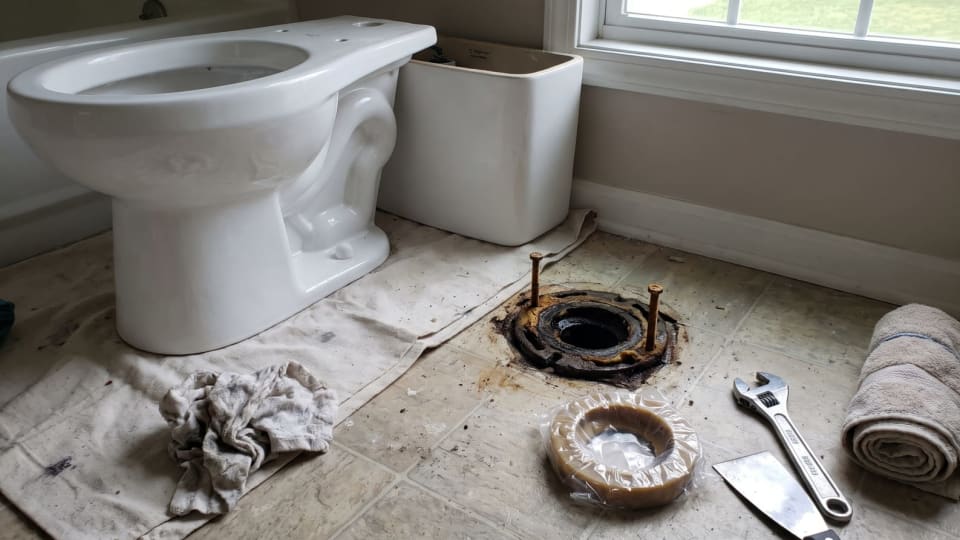
Corroded or broken flange. The flange is the fitting in the floor that the toilet bolts to. In older homes it’s often cast iron, and This Old House explains that a badly corroded cast-iron flange has to be cut out and replaced, for example with an expansion flange that locks into the drainpipe. A new toilet bolted to a broken flange will rock and leak just like the old one. Source: This Old House – How to Repair a Cast-Iron Toilet Flange · Checked: November 8, 2026
Soft or stained subfloor. A slow leak from a failed wax ring can soak the wood under the toilet for months. Signs include a spongy floor, lifting flooring, or stains on the ceiling below an upstairs bathroom. The damage has to be repaired before any toilet can seal properly.
A drain or sewer problem. If the toilet clogs again and again, gurgles, or makes the tub or shower drain back up when it’s flushed, the blockage may be in the main line. Replacing the toilet won’t fix that. See why a drain keeps clogging and the signs of a sewer line problem, and consider drain cleaning or a camera inspection first.
Cold-weather cracks. In a Spokane home or cabin left unheated in winter, water in the tank and bowl can freeze and crack the porcelain the same way it splits pipes. Before leaving a property unheated, shut off the water and drain the toilet. More on that in how to prevent frozen pipes in Spokane.
Choosing a Replacement: What to Know Before Buying
- Rough-in size: the distance from the finished wall to the center of the drain bolts. The new toilet must match it, and older homes don’t always have the most common size.
- Bowl shape: round saves space; elongated is longer. Check door clearance in small bathrooms.
- Height: standard or taller “comfort” height.
- One-piece or two-piece: one-piece has no tank-to-bowl joint to leak.
- Flush type: gravity, pressure-assisted or dual-flush; ask how easy parts are to find.
- The WaterSense label for lower water use and tested flush performance.
- Shutoff valve and supply line: old multi-turn valves often seize or drip once disturbed, so replacing them during a swap is common.
DIY or Call a Plumber?
Many homeowners handle the simple fixes themselves: adjusting a chain, swapping a flapper, setting the water level, or replacing a seat. The 10-minute dye test is an easy way to confirm a tank leak first.
It’s time to call a licensed plumber when:
- Water appears at the base, or the toilet rocks on the floor
- The tank or bowl is cracked
- The flange is corroded or broken, or the floor around the toilet feels soft
- The shutoff valve won’t close or starts leaking when touched
- Clogs keep coming back, or other drains gurgle or back up
Setting a toilet looks simple, but an unevenly crushed wax ring or overtightened bolts can cause a slow leak or a cracked base.
What Affects the Cost: Repair vs. Replacement
- The part that failed: a flapper or fill valve is a smaller job than pulling and resetting the toilet.
- Whether the toilet has to come up: base leaks, rocking and lodged objects usually mean removing it.
- The flange and subfloor: a corroded cast-iron flange or a soft floor adds work beyond the toilet itself.
- The new toilet: models vary widely.
- Valve and supply line replacement, haul-away of the old toilet, and scheduled vs. after-hours timing.
When comparing options, ask for both a repair price and a replacement price on the same visit, and ask what happens if the flange or floor turns out to be damaged once the toilet is lifted. A written, itemized estimate is the only reliable figure.
Before hiring, verify the plumber. Washington L&I’s Verify tool shows whether a business has an active contractor registration, whether plumbing work is done by a certified plumber, and whether there are bond claims, workers’ comp issues or violations on record. Source: Washington L&I – Verify a Contractor, Tradesperson or Business · Checked: November 8, 2026
Video from Ask This Old House: how an old toilet is removed and a new toilet is installed, step by step:
Common Questions
Is it worth repairing a 30-year-old toilet?
Often, yes, if the problem is a tank part and the porcelain is sound. Age becomes the deciding factor when it’s combined with cracks, frequent repairs, parts that are hard to find, or high water use.
Can a cracked toilet tank be repaired?
Not reliably. Sealants can slow a seep, but the porcelain stays weak and can split further. A leaking crack, or one below the water line, means replacing the tank or the whole toilet.
Do new low-flow toilets clog more than old ones?
Some early low-flow designs flushed weakly. Today’s WaterSense labeled toilets must pass flush performance testing. Frequent clogs can also come from wipes or a partial blockage further down the drain, which a new toilet won’t fix.
Does the flange need to be replaced with the toilet?
Not always. A solid, secure flange at the right height can be reused with a new wax ring and bolts. A cracked, corroded or loose one should be repaired or replaced while the toilet is off the floor.
Is a running toilet a reason to replace it?
Rarely. A running toilet is usually a flapper, chain or fill valve problem. The exception is a damaged flush valve seat that no new flapper can seal against, or an old model whose parts are no longer available.
Quick Summary
- Tank problems (running, weak flush, slow refill) are almost always worth repairing.
- Cracks, constant clogs, unavailable parts and repeated repairs point to replacement.
- Check the flush rating or date stamp inside the tank.
- Rocking and base leaks often trace back to the flange or subfloor, which must be fixed for any toilet to seal.
- Repeated clogs with gurgling elsewhere point to the drain, not the toilet.
- Get a written, itemized estimate for both options, and verify the plumber with L&I.
Repair or Replace a Toilet in Spokane?
One call connects to an independent, local plumbing provider serving Spokane and Spokane Valley who can check the toilet, the flange and the drain and explain the options.
📞 Call Now – Connect With a Spokane Plumber
Spokane Home Help is a referral service, not a plumbing contractor.
Related Articles
- Toilet Repair in Spokane
- Why Does My Drain Keep Clogging?
- How to Check Your Home for a Hidden Water Leak
- How to Shut Off Your Main Water Valve
Spokane Home Help is a referral service and is not a plumbing contractor. Calls may be connected to an independent, third-party plumbing provider serving the caller’s area. Spokane Home Help does not perform plumbing work and is not responsible for the work, pricing, licensing or availability of any provider. Before work begins, confirm the provider’s Washington L&I registration and ask for a written estimate.